

Iran on Tuesday called off negotiations with the United States hours before President Trump’s deadline to reach a deal to open the Strait of Hormuz or face widespread attacks on bridges and electric plants, according to three senior Iranian officials quoted by The New York Times.
The decision to end indirect talks with the Trump administration, which was being mediated by Pakistan, came after Trump threatened on social media that a “whole civilization will die tonight," if a deal to open the strait was not reached by 8:00 p.m. Eastern time, said the three officials, who requested anonymity to discuss national security.
Still, Iran left open the possibility that Pakistan could serve as a conduit if talks were to resume.
Widespread attacks across Iran on Tuesday targeting railroads, rail stations, airports, bridges and Kharg Island, the country’s energy hub, also factored into the decision to end the talks, the Iranian officials said.
Two Pakistani sources with knowledge of the discussions told Reuters that efforts to facilitate talks between the US and Iran are still ongoing.
Abdolreza Davari, a former politician and adviser to Iran’s former president, Mahmoud Ahmadinejad, told The New York Times in a telephone interview from Tehran that President Trump’s threat had hardened Iranian resolve.
“They want to scare us so the Islamic Republic retreats, but we have nothing to lose," he said. “We will also double down and strike harder."
On Monday, Tehran had responded to Washington’s initial proposal for ending the conflict with a 10-point counterproposal. Pakistan had called for both sides to accept a 45-day ceasefire to allow space for talks.
Iranian officials and military commanders reacted publicly to Trump’s comments, denouncing them as insulting and ignorant of Iran’s pride in its ancient history. The Revolutionary Guards Corps, which is leading the war, doubled down, vowing retaliatory strikes across the region if Iran’s power plants were attacked.
“Our response to the enemy’s brutality is to stand firm on our national interests and rely on the inner strength of the great Iranian nation," said Iran’s first vice president, Mohamad Reza Aref, in a post on social media.
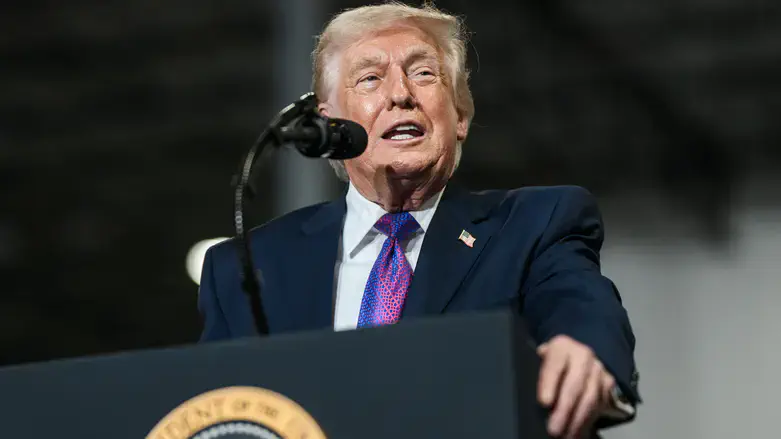
On Monday, Trump gave a speech in which he clarified that the deadline he set for reaching an agreement with Iran until Tuesday remains in place, and issued additional threats against the regime in Tehran.
"The entire country [of Iran] can be taken out in one night, and that night might be tomorrow night," Trump said. The remarks came after Iran rejected the offer of a temporary ceasefire and demanded an end to the war subject to several conditions: an end to conflicts in the region, the establishment of a protocol for safe passage through the Strait of Hormuz, the restoration of infrastructure and the complete lifting of sanctions.
Iran later rejected Trump’s threats, claiming the US suffered a humiliation in the war and calling the President “delusional".
A spokesman for Iran’s Armed Forces Central Headquarters said, “The rude, insolent, and baseless threats of the delusional US President will not make up for the humiliation and disgrace of the United States in the West Asia region."
(Israel National News' North American desk is keeping you updated until the start of the Seventh Day of Passover in New York. The time posted automatically on all Israel National News articles, however, is Israeli time.)