

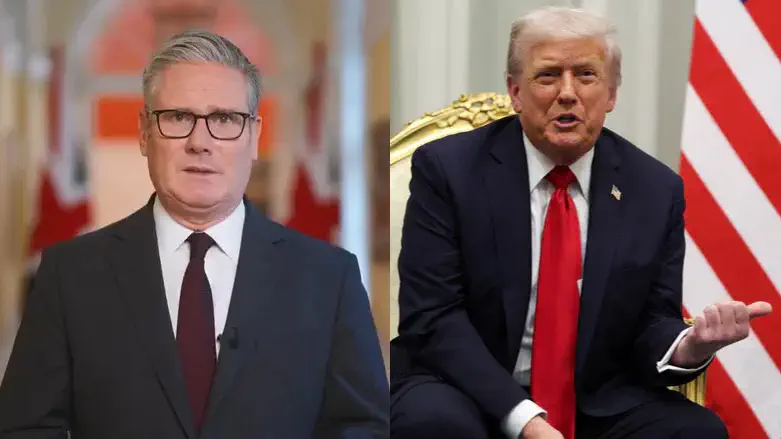
The UK has approved the United States' use of British bases to launch strikes targeting Iranian sites in the Strait of Hormuz, the BBC reported on Friday.
This decision marks an expansion from the previously limited authorization for US forces to use UK bases only for defensive operations aimed at preventing Iranian missile attacks that threatened British interests or lives.
Downing Street confirmed that ministers agreed to extend the scope of US operations to include protection for ships navigating the vital Strait of Hormuz, which has become a flashpoint due to Iranian actions. However, the UK will not directly participate in any strikes, and Downing Street emphasized that "the principles behind the UK's approach to the conflict remain the same."
The UK bases that will be used by US forces include RAF Fairford in Gloucestershire and Diego Garcia in the Indian Ocean. The US had previously faced criticism from President Donald Trump for NATO allies' reluctance to offer warships to reopen the Hormuz shipping channel. Trump had argued that reopening the strait would be a relatively simple military task with minimal risk.
UK military planners have worked alongside US Central Command to assess options for ensuring the safe passage of tankers through the strait, which has been effectively blocked due to Iranian threats of retaliation in response to a US-Israeli bombing campaign.
A spokesperson from Downing Street explained that Friday's discussions focused on the impact of Iran's "reckless strikes," particularly against Red Ensign vessels and those of close UK allies and Gulf partners. The ministers agreed that such actions risked further destabilizing the region and worsening the global economic impact, including on the UK.
This decision came shortly after Iran’s foreign minister, Abbas Araghchi, warned the UK that its choice to allow the US to use British bases would be viewed as "participation in aggression." In a call with UK Foreign Secretary Yvette Cooper, Araghchi criticized the UK’s approach as "negative and biased" and demanded that the UK cease cooperation with the United States.
In response, the Foreign Office stated that Cooper had condemned Iran's "reckless attacks" and its actions disrupting the Strait of Hormuz. She also called for "an immediate comprehensive moratorium on all attacks on civilian infrastructure, including oil and gas installations."
Several European nations have rejected Trump’s calls to participate in a mission aimed at reopening the Strait of Hormuz, a critical transit point for oil, gas, and other goods now largely blocked by Iran. European leaders have expressed their unwillingness to deploy forces into a conflict they did not initiate, despite Trump’s warnings that such reluctance could harm NATO alliances.
Trump, in response, called on "other nations whose economy depend on the strait, far more than ours. We get less than one percent of oil from the Strait. Many of the Europeans get quite a bit. So we want them to come and help us with the strait."
(Arutz Sheva-Israel National News' North American desk is keeping you updated until the start of Shabbat in New York. The time posted automatically on all Israel National News articles, however, is Israeli time.)