

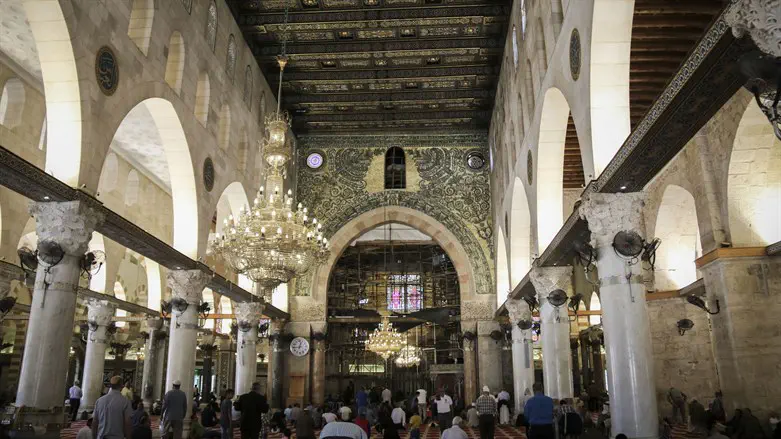
The Hadash and Ta’al parties appealed to Prime Minister Benjamin Netanyahu, requesting that he remove the restrictions on Muslim worshippers entering the Al-Aqsa Mosque during the remaining days of the month of Ramadan.
In the letter sent to Netanyahu, the parties stated that during the last ten days of Ramadan, religious and spiritual activity reaches its peak, especially on Laylat al-Qadr.
According to them, restrictions are being imposed on Muslims entering the Al-Aqsa Mosque while, in the rest of the country, shopping centers, restaurants, and cafés are operating normally. Students in southern Israel have returned to school, and in several cities hundreds recently celebrated the holiday of Purim.
The parties failed to note that Purim celebrations were smaller and more subdued than usual, with most people remaining near bomb shelters or moving their celebrations there; large events were cancelled. In Jerusalem, where Al-Aqsa Mosque is located, students continue their studies remotely, and across all of Israel, only workplaces with access to a bomb shelter within the required timeframe have reopened.
They also claimed that among the Arab public there is a growing perception that the restrictions on entering the Al-Aqsa Mosque are not based on security considerations related to the war, but rather on political calculations and attempts to appease “very extremist" elements in the government.
Hadash and Ta’al insisted that these restrictions during the sensitive period of Ramadan harm freedom of religious worship, and that the Islamic Waqf authorities can ensure the safety of worshippers and maintain order while allowing freedom of worship.