

A confidential report from the International Atomic Energy Agency (IAEA), circulated to member states and obtained by The Associated Press on Friday, reveals that Iran has not allowed the agency access to its nuclear facilities that were bombed by Israel and the United States during the 12-day war last June.
The IAEA report stressed that due to the lack of access to the affected facilities, the agency cannot verify whether Iran has suspended all uranium enrichment activities or assess the size of Iran's uranium stockpile.
Iran has four declared enrichment facilities, but the IAEA noted that it "cannot provide any information on the current size, composition or whereabouts of the stockpile of enriched uranium in Iran."
The report emphasized that the "loss of continuity of knowledge" regarding Iran's nuclear activities is an issue of urgent concern.
Iran's letter to the IAEA, dated February 2, stated that normal safeguards were "legally untenable and materially impracticable" due to threats and "acts of aggression." The report also mentioned that Iran had provided IAEA inspectors access to unaffected nuclear facilities at least once since June 2025, except for a power plant under construction at Karun.
Under the Treaty on the Non-Proliferation of Nuclear Weapons (NPT), Iran is legally obligated to cooperate with the IAEA. However, Iran suspended its cooperation with the agency following the June war.
According to the IAEA, Iran currently possesses 440.9 kilograms of uranium enriched up to 60% purity, a step away from weapons-grade uranium (90%). This stockpile could potentially enable Iran to build up to 10 nuclear bombs if it decides to weaponize its program, although IAEA Director General Rafael Grossi has clarified that Iran does not currently have such weapons.
Normally, such highly enriched uranium would be verified every month, but the IAEA has not had direct access to Iran’s nuclear sites since June. In the absence of physical inspections, the agency has relied on commercially available satellite imagery to monitor activity at key facilities.
Images from the Isfahan site, located about 350 kilometers southeast of Tehran, show "regular vehicular activity" near a tunnel complex used to store enriched material. The IAEA also observed activities at the Natanz and Fordow enrichment sites, but without access, the agency cannot confirm the nature or purpose of the activities.
The IAEA report also noted that Grossi participated in ongoing US-Iran nuclear negotiations in Geneva on February 17 and February 26, where he "provided advice" on the verification of Iran’s nuclear program.
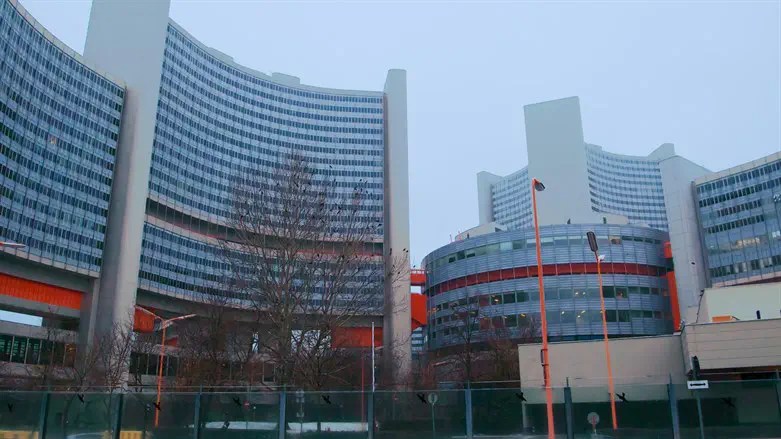
No deal was announced following Thursday’s discussions, but Iran’s Foreign Minister, Abbas Araghchi, confirmed progress and stated that "technical talks" would resume in Vienna, Austria, next week. US officials told Axios that the meeting was positive.
(Arutz Sheva-Israel National News' North American desk is keeping you updated until the start of Shabbat in New York. The time posted automatically on all Israel National News articles, however, is Israeli time.)