

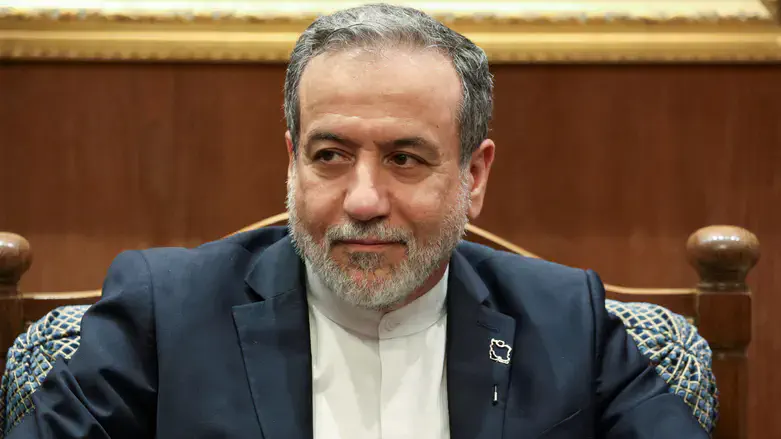
Iranian Foreign Minister Abbas Araghchi took to social media on Thursday evening and wrote that progress was made in that day’s Omani-mediated talks with the US, which took place in Geneva.
“Further progress has been made in our diplomatic engagement with the United States. This round of talks was the most intense so far," wrote Aragchi.
He added that the talks “concluded with the mutual understanding that we will continue to engage in a more detailed manner on matters that are essential to any deal - including sanctions termination and nuclear-related steps."
Araghchi further stated, “In parallel with the political track, technical teams will convene in Vienna in the coming days. Their mission is as critical as ours. We thank Oman for its persistent good offices, and wish to express our gratitude to Switzerland for hosting another round of talks."
The Iranian Foreign Minister made similar comments in an earlier interview with Iranian state television, saying that the indirect talks with the United States regarding the Iranian nuclear program have been some of the country’s “most intense and longest rounds of negotiations." He confirmed that agreements have been reached on certain issues, but differences remain on others.
Araghchi did not provide further specifics but emphasized that "what needs to happen has been clearly spelled out from our side."
Omani Foreign Minister Badr al-Busaidi described "significant progress" following Thursday’s talks.
“We have finished the day after significant progress in the negotiation between the United States and Iran. We will resume soon after consultation in the respective capitals. Discussions on a technical level will take place next week in Vienna. I am grateful to all concerned for their efforts: the negotiators, the IAEA, and our hosts, the Swiss government," the Omani diplomat said in a statement.
A senior US official told Axios reporter Barak Ravid that the talks in Geneva were "positive."
Thursday’s talks, the third round in recent weeks, included both indirect exchanges mediated by al-Busaidi and direct discussions between US envoys Steve Witkoff and Jared Kushner and Iranian Foreign Minister Abbas Araghchi, according to a source familiar with the details.
On Wednesday, ahead of the talks, US Vice President JD Vance said that Washington has evidence that Iran is trying to rebuild its nuclear program.
He further stressed that President Donald Trump prefers a diplomatic solution with Iran, but has other options available should that route fail.
US Secretary of State Marco Rubio, meanwhile, said that Iran poses a grave threat to the United States which goes beyond just its nuclear program.
“I want you to know that Iran poses a very great threat to the United States and has for a very long time," said Rubio.
“First and foremost, after their nuclear program was obliterated, they were told not to try to restart it. And here they are, you can see them always trying to rebuild elements of it. They're not enriching right now, but they're trying to get to the point where they ultimately can," he added.
“The other thing I would point you to, however, is that Iran possesses a very large number of ballistic missiles, particularly short-range ballistic missiles that threaten the United States and our bases in the region, and our partners in the region, and all of our bases in the UAE, in Qatar, in Bahrain. And they also possess naval assets that threaten shipping and try to threaten the US Navy," Rubio pointed out.
“So I want everybody to understand that, and beyond just the nuclear program, they possess these conventional weapons that are solely designed to attack America and attack Americans if they so choose to do so," he stated.