

Nuclear negotiations between the US and Iran in Geneva on Thursday concluded with what Omani Foreign Minister Badr al-Busaidi described as "significant progress," with additional discussions scheduled for next week.
Al-Busaidi said at the end of the talks that consultations would now take place in Washington and Tehran, followed by technical-level discussions in Vienna. In a full statement, he said, “We have finished the day after significant progress in the negotiation between the United States and Iran. We will resume soon after consultation in the respective capitals. Discussions on a technical level will take place next week in Vienna. I am grateful to all concerned for their efforts: the negotiators, the IAEA, and our hosts, the Swiss government."
Iranian Foreign Minister Abbas Araghchi said that “some positive things have been achieved regarding sanctions and the nuclear issue," and noted that the technical team will begin talks in Vienna starting this coming Monday.
According to him, the current round was “the best and most serious," and that the sides have entered a stage of discussing the details of the agreement and the lifting of sanctions. He added that contact will be made with experts from the International Atomic Energy Agency for discussions on additional issues.
Following the talks, a senior US official told Axios reporter Barak Ravid that they were "positive."
The meeting was viewed within the Trump administration as a critical opportunity for diplomacy before President Donald Trump determines whether to pursue military action.
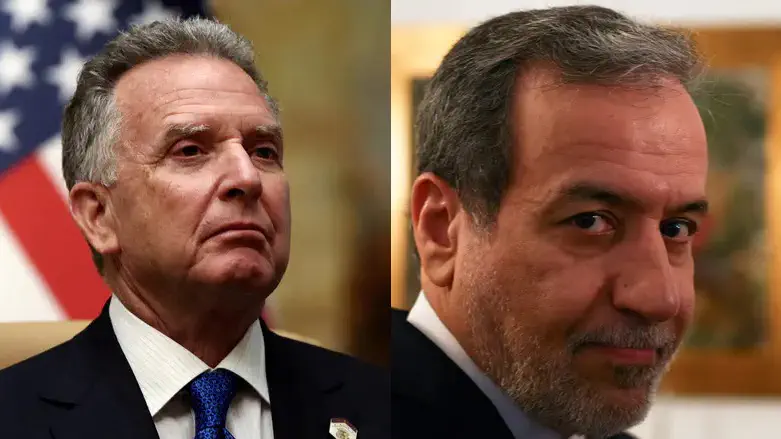
Thursday’s talks, the third round in recent weeks, included both indirect exchanges mediated by al-Busaidi and direct discussions between US envoys Steve Witkoff and Jared Kushner and Iranian Foreign Minister Abbas Araghchi, according to a source familiar with the details.
During the morning session, Iran presented a draft framework for a potential nuclear agreement. A source said the US side expressed disappointment with Tehran’s positions earlier in the day. It was not immediately clear what developments during the afternoon session led to the positive assessment later issued by Oman.
Al-Busaidi and International Atomic Energy Agency Director General Rafael Grossi took part in the negotiations. The delegations paused at one point, and the US representatives met with Ukrainian officials before the talks resumed.
An Iranian official told Al Jazeera during the break that Tehran had rejected proposals requiring it to permanently end uranium enrichment, dismantle nuclear facilities, or transfer its enriched uranium stockpile abroad. The official stated that Iran’s plan would lower its stockpile to low enrichment levels under IAEA supervision.
“Our proposal in Geneva is politically serious, technically creative, and includes everything required to reach an agreement immediately," the Iranian official said.
Separately, a senior Iranian official told Reuters that the United States and Iran could reach a framework for a deal if Washington separates "nuclear and non-nuclear issues."
The US entered the discussions seeking assurances that any future agreement would remain in force indefinitely and calling on Iran to relinquish its stockpile of approximately 10,000 kilograms of enriched uranium. Washington signaled limited flexibility on Iran’s demand to maintain enrichment capabilities, contingent on proof that no pathway to a nuclear weapon exists.
In his State of the Union address, President Trump said Iran must clearly declare that it does not seek nuclear weapons. Iranian officials have consistently denied pursuing such arms.
Ali Shamkhani, a senior adviser to Supreme Leader Ali Khamenei, wrote on X during the negotiations that if the US focus is solely on preventing a nuclear weapon, it aligns with Khamenei’s fatwa and Iran’s defensive doctrine. He added that an agreement could be achieved quickly and that Araghchi has the necessary authority to finalize a deal.