
In an interview with Israel National News - Arutz Sheva, Ran Yishai, head of the Research Department at the Jerusalem Institute for Applied Policy and an expert on international relations, warns of the manner in which Qatar channels vast sums of money to ostensibly civilian institutions inside Israel.
According to Yishai, Qatar employs similar methods worldwide, but when such activity takes place within Israel it poses far greater risks. Qatar, he explains, is a Muslim Brotherhood state that operates through Muslim Brotherhood networks in multiple ways, with money serving as the central engine. Donations are directed to universities, schools, hospitals, clinics, welfare programs and other frameworks, with the strategic goal of shaping public opinion in Qatar’s favor-much as has already occurred at universities across the US and Europe.
Yishai points to several examples, including Doha Stadium in Sakhnin, the Qatar Charity organization that was shut down only to be replaced by alternative funding channels, and additional organizations operating in Israel. Some of this activity is reported and monitored, he notes, while other parts remain opaque.
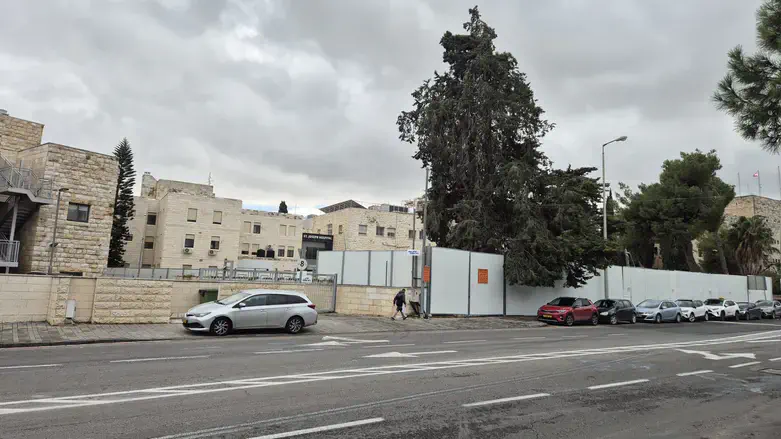
Recently, Yishai says, it was revealed that the French Hospital in eastern Jerusalem is receiving millions of dollars from Qatar to finance its expansion. “They didn’t even try to hide it. It was reported on Al Jazeera," he says. According to Yishai, in order to evade scrutiny by Israel’s Registrar of Associations, the supporting nonprofit was closed and funds are now being transferred through a Palestinian Authority bank. This, he stresses, is taking place just a short distance from the national headquarters of the Israel Police, which “does everything it can, but requires a clear policy decision in order to investigate such cases. International diplomats affiliated with the Palestinian Authority are involved."
Yishai argues that Israel has chosen not to confront such diplomats, while their countries continue to escalate their actions. He cites France’s recognition of Palestine, a move that went unanswered by Israel. “So why shouldn’t they continue?" he asks. He notes that the last significant diplomatic pushback came during Israel Katz’s tenure as foreign minister, when steps were taken against the Norwegian consulate and, in part, the Spanish consulate for actions that harmed Israel’s sovereignty in Jerusalem. Even so, Yishai emphasizes, numerous consulates in Jerusalem continue to operate freely in ways that undermine Israeli interests.
Among additional examples, Yishai mentions donations by the Turkish consulate to organizations suspected of cooperating with terrorist groups, as well as Italian soldiers who were found operating in the Binyamin region under the pretext of “monitoring" IDF activity. In that case, he notes, it was the Israeli ambassador who was summoned for clarification, rather than Israel summoning the Italian ambassador for a reprimand and investigation.
Yishai also points to the British consulate, which he says supported illegal construction in Khan al-Ahmar. “We did nothing about it, and construction continues with signs bearing the sponsorship of foreign countries. Until we act, they will continue," he warns.
Asked whether Qatar’s funding of the French Hospital constitutes support for terrorism or a purely civilian initiative, Yishai rejects the distinction. “It’s difficult to separate the two, just as it’s difficult to separate agricultural crime from terrorism," he says. “When Qatar supports Hamas, it transfers money for construction and development, and what Hamas does with that money is another question. In Jerusalem, Qatar supports institutions defined as charitable and civilian, but those bodies in turn support organizations suspected of backing terrorism." As examples, Yishai cites Al Jazeera and UNRWA-entities that present themselves as civilian but, he argues, are deeply intertwined with support for terror. “You can’t make such a separation," he concludes.
Finally, Yishai stresses that this is not classified intelligence uncovered through covert operations, but open-source information available to anyone willing to look. “We are a civilian body and have no access to intelligence material," he says. “This information simply needs to be placed on the table so decision-makers can act." While acknowledging that closing consulates or confronting foreign actors is not easy, Yishai adds, “The people of Israel have learned that it is better to live hard than to die easy."