

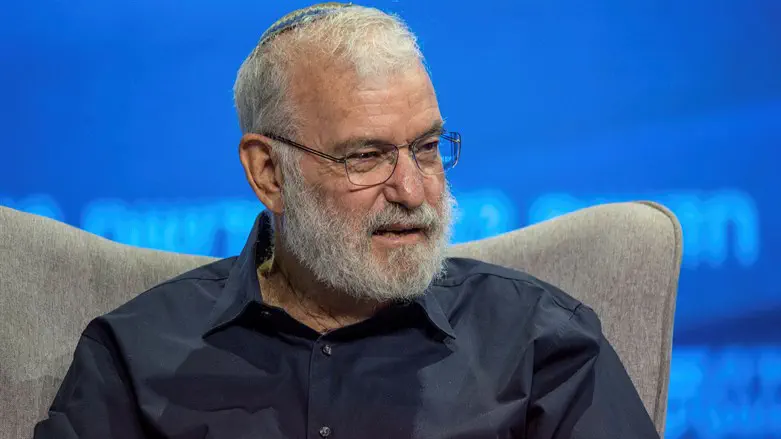
Maj. Gen. (res.) Yaakov Amidror, a senior fellow at the Jerusalem Institute for Strategy and Security and former head of Israel’s National Security Council, spoke to Radio 103FM to assess why the United States has not yet carried out a strike on Iran.
“I believe the Americans realized that, during the height of the protests inside Iran, when the opposition’s momentum was at its peak, they lacked the power to make a meaningful impact. To do so, they would have needed to concentrate more force," Amidror said.
He continued, “By the time they were prepared to act, the unrest in Iran had subsided. Now, to take any action, a much larger operation would be required. It seems the Americans are uncertain about how to proceed because they don’t have a strike that could result in regime change. Meanwhile, both sides are exchanging accusations. Iran’s ability to harm the U.S. is limited, while the Americans talk tough, knowing that if they launch an operation, Iran would be significantly damaged."
Amidror offered another possibility: “If Trump realizes the effort isn’t worth it, he may pull back. There’s no doubt that he has committed a great deal, but he can always find excuses - there is really no one holding him to precise accountability."
He also cautioned that failing to act could have regional repercussions. “In my view, if he does nothing, Iran’s influence in the region will grow, America’s power will diminish, and the Iranians will be able to stall until the midterm elections in November. Afterward, they’ll know how to proceed," he warned.
What if Iran responds to a strike by targeting Israel? “If there is a strike on Iran, we must remain vigilant, as it’s possible that the Iranians will retaliate against Israel. If that happens, it will present an opportunity for Israel to address the Iranian threat. That’s why I would maintain our strength so we can join the Americans, if needed," he concluded.