

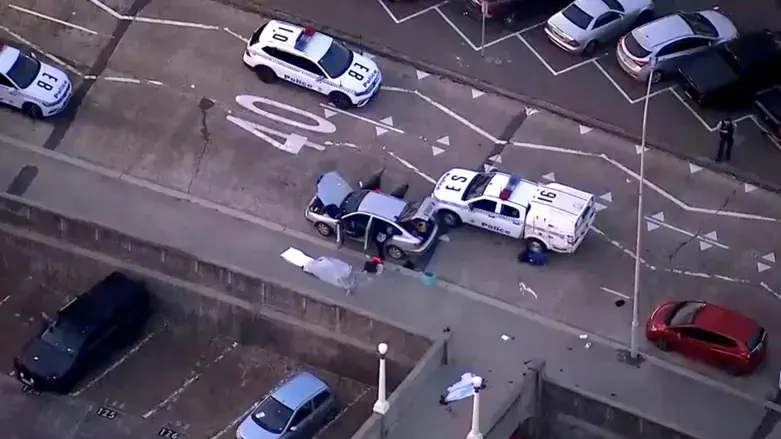
Australia’s lower house of Parliament on Tuesday approved legislation enabling a national gun buyback program and tightening background checks for firearm licences, Reuters reported.
The legislation follows the country’s worst mass shooting in decades at Bondi Beach in Sydney last month.
The bill passed the House of Representatives by a vote of 96 to 45, despite opposition from conservative lawmakers, and now moves to the Senate.
Introducing the legislation, Home Affairs Minister Tony Burke referenced the December 14 Bondi Beach attack that killed 15 people, saying it was carried out by individuals who had “hate in their hearts and guns in their hands."
“The tragic events at Bondi demand a comprehensive response from government," Burke said. “As a government, we must do everything we can to counter both the motivation and the method."
The measures would create a national gun buyback scheme to purchase surplus and newly restricted firearms, and impose stricter background checks for state‑issued firearm licences by incorporating information from the Australian Security Intelligence Organization.
The government noted on Sunday that Australia recorded 4.1 million firearms last year, including more than 1.1 million in New South Wales, the country’s most populous state and the site of the Bondi attack.
New South Wales separately passed new laws last month limiting individuals to four firearms - and farmers to 10 - while requiring licence renewal every two years instead of five.
Parliament, recalled early from its summer break by Prime Minister Anthony Albanese in the wake of the Bondi attack, is also considering separate legislation that would lower the threshold for prosecuting hate‑speech offenses.
Albanese announced two weeks ago that Australia will launch a royal commission inquiry into the Bondi Beach terrorist attack in which 15 people were murdered.
"I've repeatedly said that our government's priority is to promote unity and social cohesion. And this is what Australia needs to heal," he told reporters at the time.
The federal royal commission, Australia’s highest-level government inquiry, will examine issues ranging from intelligence failures to the prevalence of antisemitism nationwide.
Victims' families, business leaders, sports figures and leading scientists had signed open letters demanding a sweeping investigation. Albanese had previously dismissed these calls, saying he was focused on "urgent action", but mounting pressure forced a shift.
One of the terrorists, Sajid Akram, 50, was shot dead by police during the attack. His 24-year-old son Naveed, an Australian-born citizen, remains in prison and has been charged with terrorism and 15 murders.
Police and intelligence agencies are facing scrutiny over whether they could have intervened earlier. Naveed Akram had been flagged by Australia’s intelligence agency in 2019 but later fell off the radar after being deemed no imminent threat.