

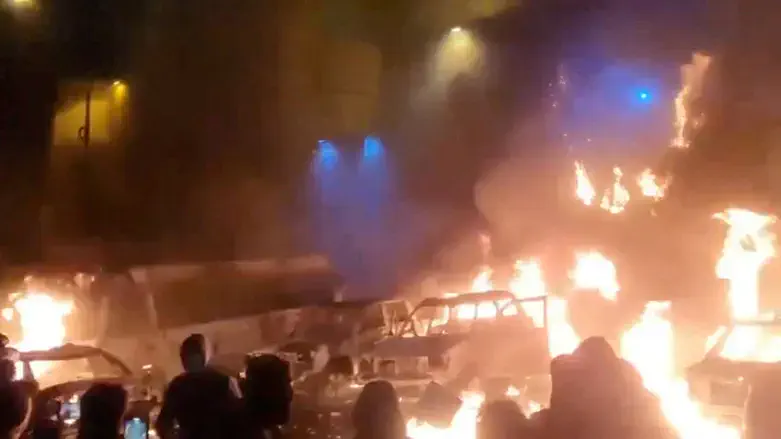
Several doctors from hospitals in Tehran were interviewed secretly by The Guardian and reported that hospital teams are overwhelmed with injured patients, with most suffering from gunshot wounds to the eyes and heads.
An ophthalmologist at one of the hospitals in Tehran told The Guardian that he documented over 400 gunshot injuries to the eyes at his hospital, while other doctors confirmed that protesters were intentionally shot in the eyes and head.
One doctor from Tehran stated that regime forces are "are deliberately shooting at the head and the eyes. They want to damage the head and the eyes so they can no longer see, the same thing they did in [2022]." He noted that the eyes of many patients could notbe saved and the victims were permanently blinded.
Another doctor told The Guardian that hospital teams are collapsing due to a lack of equipment and blood supplies to treat the influx of injured people coming to the hospitals in the city. saying: “It’s like in the war movies where you see the injured soldiers getting treated on the open field. We don’t have blood, we don’t have enough medical supplies. It’s like a war zone."
One of his colleagues detailed how he treated injured protesters on the ground in open spaces and freezing temperatures due to a lack of space in the hospital departments. The doctors mentioned that the shutdown of internet and communication networks makes their work very difficult, and that security forces also come to the hospitals to arrest injured protesters.
“My colleagues are very distressed, tired and horrified. They are breaking down in tears." One colleague, a doctor, was wounded while travelling to the hospital, after being shot by authorities," the doctor shared.
He added: “Eyes were hit by birdshot pellets and it was deliberate, they are shooting to kill," and recalled one patient whose body was riddled with 20 bullets.
Iran International reported on Tuesday that it has concluded, following what it described as an extensive verification process, that at least 12,000 people were killed so far during the ongoing protests in Iran, mainly over two consecutive nights.
According to Iran International, the assessment was reached after reviewing overlapping accounts and evidence from multiple sources, including individuals described as close to Iran’s Supreme National Security Council and the presidential office, as well as reports from members of the Islamic Revolutionary Guard Corps in several cities. The outlet also cited testimony from eyewitnesses, families of those killed, medical staff, and information linked to hospitals.
The report states that the killings occurred largely on Thursday and Friday, identified as the deadliest period, and characterizes the events as unprecedented in scale, geographic spread, and level of violence in Iran’s contemporary history. Iran International said those killed were mostly civilians and that many were under the age of 30.
Iran International further reported that, based on information it received, the deaths were primarily caused by forces affiliated with the Revolutionary Guard and the Basij. The outlet asserted that the operation was organized and carried out following directives from Iran’s highest leadership, with the involvement of senior state institutions.
US President Donald Trump warned on Tuesday night that the United States is prepared to “take very strong action" if Iran begins hanging anti-government protesters.
"We will take very strong action. If they do such a thing, we will take very strong action," Trump stated.
The President noted he is aware a “pretty substantial number" of demonstrators have already been killed during more than two weeks of unrest.
Trump repeated that “there’s a lot of help on the way" for the Iranian people, saying assistance is being offered in “different forms," including economic support. He referenced last year’s US airstrikes on three Iranian nuclear facilities but did not provide additional details.
Asked about his end goal in Iran, the President responded: “The end game is to win. I like winning."