

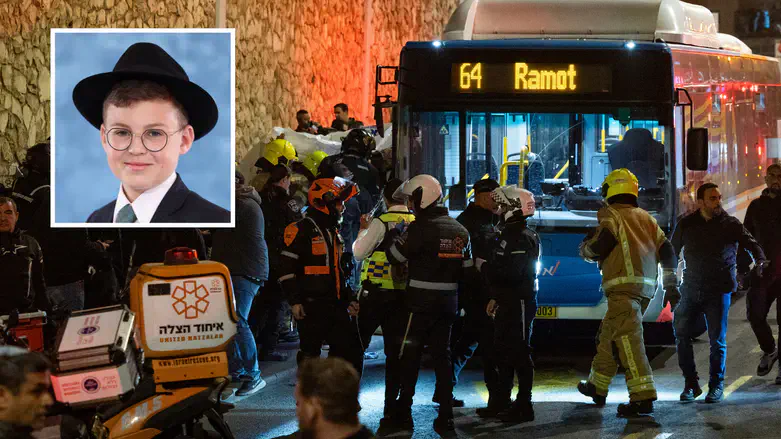
Jerusalem Faction (Hapeleg Hayerushalmi) leader Rabbi Azriel Auerbach arrived Sunday at the home of the Eisental family, following the death of 14-year-old Yosef Eisental at a haredi protest in Jerusalem last week.
Eisental was rammed and killed Tuesday night during a violent anti-draft protest by the haredi community. During the demonstration, protesters blocked major roads in Jerusalem, set trash cans on fire, and gathered around vehicles passing through the area.
One of the targeted vehicles, a Line 64 bus, became the center of an unusual clash that ended in tragedy. Protesters were recorded surrounding the bus on all sides, blocking its path while shouting and attempting to damage it. At some point, the driver, Fakhri Khatib, accelerated quickly into the crowd of protesters.
The condolence visit took place at the family's home in Jerusalem and lasted for about an hour. Rabbi Auerbach offered words of comfort to the family and encouraged the father, Rabbi Shmuel Eisental, one of the heads of the "Ohel Torah" Yeshiva.
During the visit, an emotional and halakhic (pertaining to Jewish law - ed.) question arose: Should the name of the young man who was killed be followed by the Hebrew acronym for "of blessed memory," as is customary in non-terror-related deaths, or by the Hebrew acronym for "May his blood be avenged," a phrase commonly used for victims of terrorism?
According to a report on the Behadrey Haredim website, Rabbi Auerbach responded that the proper wording should be: "The holy, Haim Yosef Eisental, my G-d avenge his blood."
The young man's grandfather, who was also present, responded that he was familiar with the halakhic arguments on the subject and mentioned that the issue is expected to be addressed soon.