

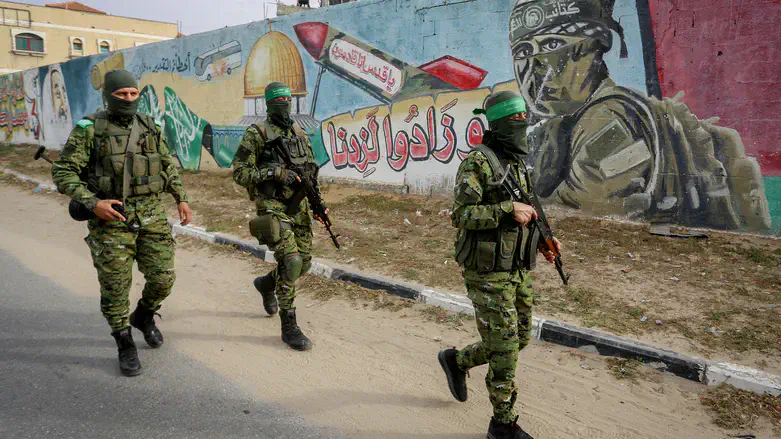
Israel and the Hamas terror group are preparing for a new round of fighting in Gaza, the Wall Street Journal reported.
WSJ added that Hamas is refusing to disarm, a key requirement for US President Donald Trump's Gaza plan.
As a result, the IDF has drawn up plans for a new ground operation, expected to be made easier by the fact that there are no longer any living hostages in Gaza, and most of the Gazan civilians are now living in tents and easy to evacuate.
Erez Winner, a research fellow at the Israel Centre for Grand Strategy, told WSJ that the war could be "much easier or faster" than expected.
Hamas has rebuilt its stock of cash and supplies and is training new fighters, as well as rebuilding parts of its tunnel network, both Arab and Israeli officials told WSJ. They also said that Hamas has used the ceasefire to crack down on opponents within Gaza and appoint new commanders.
Israeli officials also said that Israel is willing to give the US time to advance its plan.
Earlier this week, Israeli security officials warned that the Hamas terror group in Gaza is seeing a significant economic improvement.
According to data recently presented in closed security discussions and published by Ynet, Hamas currently holds between 400 million to 1 billion shekels in cash in Gaza, and the sum, according to intelligence estimates, may be even higher.
Sources in the IDF have recommended reducing the number of aid trucks entering the Gaza Strip. Since the ceasefire with Hamas took effect in October, approximately 4,200 aid trucks have entered Gaza per week.
"The population in Gaza can survive with much less," the sources explained. "Seventy percent (70%) of it belongs to the private sector, which Hamas taxes twice - 15-25% on every truck carrying food, fuel, or medicine, and an additional tax on the goods when they are sold in the market. Hamas is making tens of millions of shekels a day, and the coffers keep growing."
Hamas has been preparing for war for years and has maintained cash reserves with which it paid the salaries of tens of thousands of its operatives and officials throughout the war.
The report also revealed that Qatar, Hamas' primary patron, demanded the continued flow of thousands of trucks each week as a condition for its support, which is why there is no discussion about halting the aid. Political sources have warned that Hamas is not honoring its commitments under the agreement and is expected to receive additional concessions, including the opening of the Rafah Crossing.
It was also revealed that Hamas continues to funnel money into the Strip through indirect means, including using apps to transfer money from supporting countries, taxing currency exchange transactions, and smuggling goods through unauthorized routes-sometimes even inside the trucks themselves.