

A new research by Lt. Col. (ret.) Jonathan D. Halevi and the Jerusalem Center for Security and Foreign Affairs (JCSFA) revealed the extent of Qatar's deep and ongoing involvement in advancing a jihadist mindset among the Muslim Brotherhood and Hamas.
The research stressed that, "Qatar is not a neutral mediator but rather a state that provided Hamas with political sanctuary, financial lifelines, ideological reinforcement, and global reach. Through hosting Hamas leadership, sustaining aid flows that bolstered Hamas governance, and supporting clerical networks that sanctified violence and genocide, Qatar enabled Hamas’s transformation into a heavily armed, ideologically driven organization capable of carrying out the October 7 attack and seeking to expand its terror campaign beyond the region."
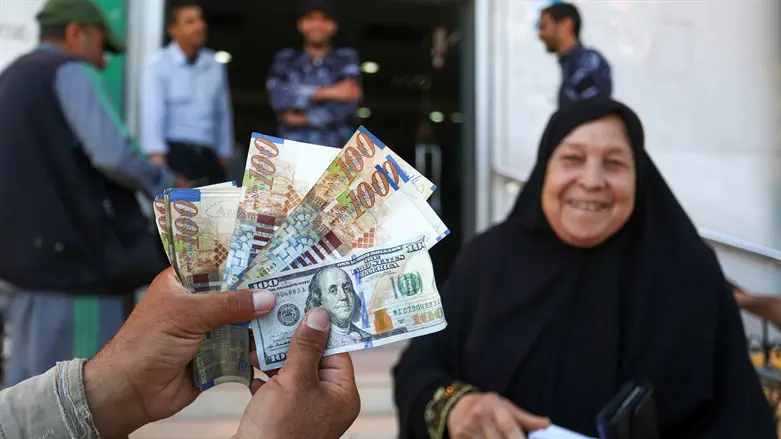
The documents and testimonies examined during the research point to broad political and financial support that Qatar provided to Hamas, enabling the organization to accelerate its military capabilities development.
As part of this, an unprecedented tunnel network was established, a local arms industry was built, and thousands of fighters were trained. All this was aimed at developing a comprehensive offensive plan, which was implemented in the October 7, 2023 attack.
According to the documents, the foundations of the plan, named "The End of Days Assurance System," were shaped years earlier and integrated military terror, psychological warfare, and an ideological component of genocide. This system was designed to lead to dramatic escalation and apply maximum pressure on the State of Israel.
The research shows that Hamas leadership considered Qatar a preferred partner, and over ten years ago, Hamas leaders participated in discussions in Doha regarding what was defined as the "Liberation Strategy," a comprehensive plan for Israel's destruction and the creation of an alternative Islamic entity in its place.
Halevi explained that Qatar's dual role was deeper than many had previously assessed, noting, "Qatar created an image for itself as a mediator and humanitarian player, but in practice, it provided Hamas with a political, economic, and ideological support system that allowed it to grow stronger, plan, and execute one of the deadliest terrorist attacks in the history of the State of Israel."
He also called on the international community to delve deeper into the document he published and, based on that, to reassess relations with Qatar and cease treating it as a neutral party in relation to the Palestinian issue.
"Ignoring the ideological and state infrastructure that enabled the October 7 attack endangers not only Israel but also regional and international stability," Halevi concluded. "The fight against terrorism cannot be limited to rhetorical condemnations - it requires exposure, accountability, and concrete actions against the states that enable it."