
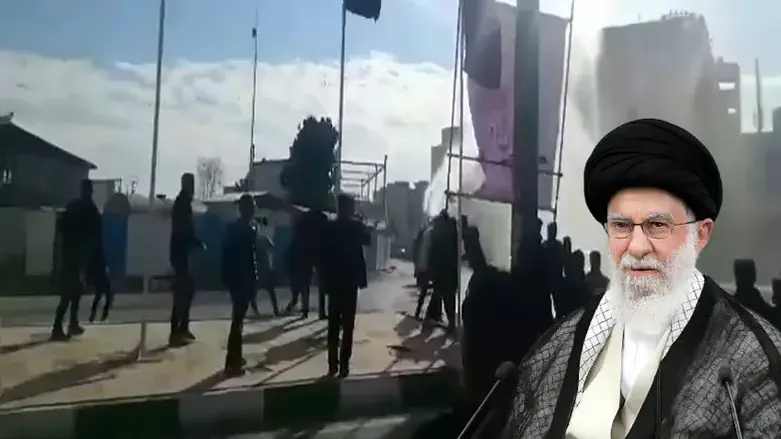
Dr. Thamar Eilam-Gindin, an Iranian expert from the Azrieli Academic College at the University of Haifa, believes that the Iranian regime is currently in an unprecedented defensive position in response to the ongoing wave of protests spreading throughout the country.
According to Dr. Eilam-Gindin, while opinions among social media users may seem divided, the reality on the ground is quite different. "If you look at opinions on social networks, it seems about 50-50, but if you look at video footage and testimonies from the ground, it's really not 50-50. There are many regime opponents who don’t take to the streets but do tweet. There are many protest videos, but none of them are as full as the 'Women, Life, Freedom' protests, except for the first day. We are not seeing crowded streets."
Dr.Eilam-Gindin emphasizes that X (formerly Twitter) no longer reflects the true mood of the public but rather what the government wants people to think the public believes. Therefore, there is a lot of pro-Islamic Republic and anti-protest rhetoric on this platform, but "if you look at the videos, the sentiment is definitely overwhelming."
She also points out that the Iranian regime is more fearful than ever before. "I don’t remember any time when the president of the world’s greatest power threatened the regime like this. The regime has been on the defensive since the 'Women, Life, Freedom' protests and even more so since the 12-day war. They are in survival mode, which has never happened before. They fear that the people will take to the streets."
To calm the public, Dr. Eilam-Gindin notes that after the 12-day war, the government tried to present itself as willing to compromise with non-disruptive protesters, even discussing the possibility of removing the double dollar exchange rate, which could ease the economy slightly but could also provoke resistance from regime insiders.
Despite the threat, the protests continue. "The protesters talk about fighting, dying, and taking Iran back for themselves. They understand that the price will be heavy. Additionally, they have a culture of martyrdom, and given their desperate situation, they have very little to lose."
Regarding the scenario of economic rehabilitation with powers like China and Russia, Dr. Eilam-Gindin says it is an "unlikely scenario, but unlikely things happen. There were times when people said that as long as there’s food on the table, it doesn't matter who rules us, but we’re not sure we’re in that situation anymore."
She also explains that the regime is trying to present a willingness to compromise with protesters who do not disrupt the order, but they are also discussing the possibility of removing the dual dollar exchange rate, which might slightly relieve the economy but at the same time cause resistance among regime insiders.
In conclusion, Dr. Eilam-Gindin was asked if it is possible to assess the outcome of the current protests. "The regime is getting closer to the point of 'let my soul die with the Philistines.' The question now is whether they will commit suicide over this or flee."
She added that the Iranian people long for external involvement but are also cautious about it. "They call on Netanyahu to attack and on Trump to act as he did in Venezuela, but past experience shows that every external intervention has ended poorly. Restoring the Shah delegitimizes any government that comes after him, especially if it’s a monarchy. This must come from within. Israel and the U.S. can act in their own interests, and that will pave the way for the Iranian people."