

The US Congress on Wednesday voted to permanently end sanctions on Syria that were imposed under ousted leader Bashar Al-Assad, clearing the way for renewed foreign investment in the war-torn country, AFP reported.
President Donald Trump had already suspended implementation of the sanctions twice, following appeals from Saudi Arabia and Turkey, both key backers of Syria’s new government led by former jihadist Ahmed al-Sharaa.
Sharaa, who now heads the Damascus leadership, sought a full repeal of the restrictions, warning that businesses would remain reluctant to engage with Syria as long as the sanctions remained law in the world’s largest economy.
The Senate passed the repeal of the 2019 Caesar Act as part of its annual defense package, with a 77-20 vote, after approval in the House of Representatives. The measure now awaits Trump’s signature.
The Caesar Act, enacted in 2019, was named after an anonymous Syrian military photographer whose images documented atrocities in Assad’s prisons. The law had imposed sweeping restrictions on investment and cut Syria off from the international banking system.
Its purpose was to block foreign companies from financing Syria’s reconstruction while Assad remained in power - at a time when the regime appeared to have regained control after years of devastating civil war that triggered mass refugee flows to Europe and fueled the rise of Islamic State.
A year ago, Sharaa’s forces captured Damascus in a lightning offensive, toppling Assad’s rule. Since then, Sharaa has impressed Trump, notably during their meeting at the US President’s May visit to Riyadh.
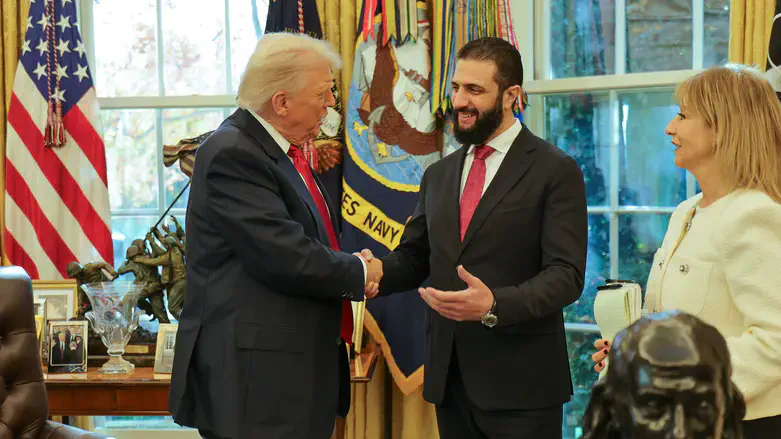
The two met again last month, this time at the White House during Sharaa’s visit to Washington.
Sharaa’s group, Hayat Tahrir al-Sham (HTS), was delisted as a terrorist organization by the US in July. Since taking power, Syria’s new leadership has sought to distance itself from its extremist past and present a more moderate image.