

A spokesperson for the German government announced on Monday that starting next week, the freeze on weapons shipments to Israel will be lifted and transfers will resume as normal.
The partial embargo was imposed in August as a response to the fighting against the Hamas terror group in Gaza. It did not constitute a full halt, but it did cause delays and restrictions in the supply of certain equipment.
The decision to renew the shipments follows the ceasefire declared several weeks ago.
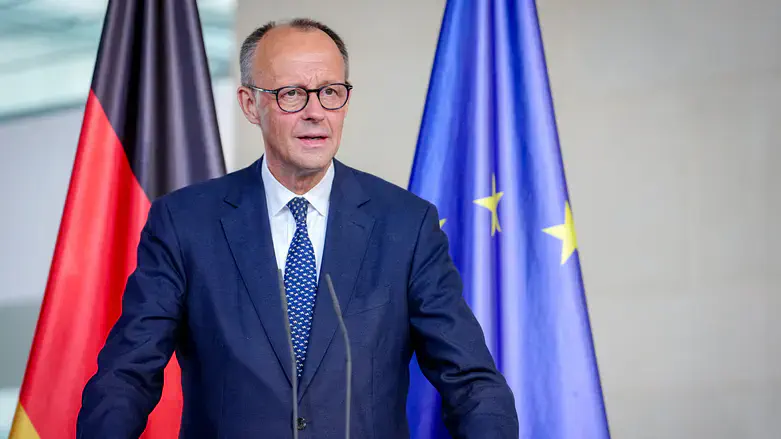
Israeli Foreign Minister Gideon Sa’ar welcomed the move, writing: “I welcome Chancellor Friedrich Merz’s decision to cancel the partial embargo. I call on additional governments to take similar steps following Germany’s lead.”
Last month, a report said that Sa’ar spoke with his German counterpart and requested the removal of restrictions on arms exports to Israel.
In August, German Chancellor Friedrich Merz announced that Berlin would not approve the transfer of military equipment to Israel, including weapons which could be used in the war in Gaza.
In a statement announcing the move, Merz said he is "very concerned about the suffering of the population in the Strip." He also demanded that Israel "not take any steps toward annexation" of Judea and Samaria.
Prime Minister Benjamin Netanyahu spoke with Merz after his announcement of the arms embargo and expressed his disappointment with the decision.
“Instead of supporting Israel's just war against Hamas, which carried out the most horrific attack against the Jewish people since the Holocaust, Germany is rewarding Hamas terrorism by embargoing arms to Israel,” said a statement from the Prime Minister’s Office.
“Prime Minister Benjamin Netanyahu said that Israel's goal is not to take over Gaza, but to free Gaza from Hamas and enable a peaceful government to be established there,” it added.
Merz’s decision also drew sharp criticism from within his own political bloc.