

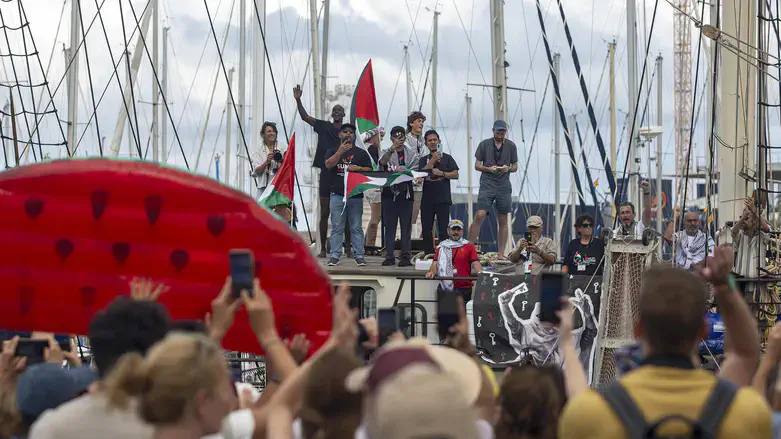
Spain announced Wednesday it will dispatch a navy vessel to assist a Gaza-bound aid flotilla, following reports that several boats were targeted by drones off Greece.
Prime Minister Pedro Sanchez stated that the ship would depart on Thursday to ensure Spanish citizens on board could be rescued and safely returned if circumstances required. He emphasized that Madrid was deeply concerned by the incidents at sea and that Spain had a responsibility to guarantee the safety of its nationals. The move followed a similar decision by Italy earlier in the day, which redirected a naval frigate toward the flotilla.
The Global Sumud Flotilla, consisting of around 50 civilian boats, reported being struck overnight by a coordinated drone attack in international waters close to the Greek island of Gavdos. Organizers said that explosions occurred above several vessels and that communications were disrupted for hours, leaving crews scrambling to maintain control. While no passengers were injured, damage was reported to sails and equipment. Among those aboard are lawyers, European parliamentarians, and well-known activists, who insist the convoy’s mission is to challenge Israel’s naval blockade of Gaza and highlight humanitarian suffering there.
Italian Prime Minister Giorgia Meloni addressed the situation in New York, where she proposed that the flotilla transfer its cargo to Cyprus. From there, the Latin Patriarchate of Jerusalem could oversee distribution to Gaza. Meloni described the convoy as “gratuitous, dangerous, and irresponsible,” stressing that both Israel and Cyprus supported the Italian plan. She argued that Rome’s approach would deliver the aid without risking lives at sea. Italian Defense Minister Guido Crosetto also weighed in, confirming that the frigate Fasan had been ordered to the flotilla’s position to safeguard Italian nationals and provide emergency assistance if needed.
The flotilla, however, rejected these calls and vowed to continue on its original course. Organizers claimed that the convoy had been subjected to intimidation tactics, including drones dropping stun grenades and itching powder, as well as unusually loud music being broadcast across their radio channels. Activists said the attacks lasted for several hours and were clearly intended to scare participants into abandoning their mission. The group publicly accused Israel and allied forces of orchestrating the harassment, though Israel has not taken responsibility for the events.
In Jerusalem, the Israeli Foreign Ministry reiterated its long-standing position that humanitarian aid must be delivered through Israeli ports for inspection before reaching Gaza. Officials warned that no attempt to breach what they called a lawful naval blockade would be tolerated. The ministry’s statement did not refer to the drones but insisted that vessels entering the conflict zone would face consequences. Despite these warnings, flotilla organizers said they remained determined to press ahead, calling on additional governments to provide protective escort and ensure the safety of their international campaigners.