

In a significant diplomatic victory for the United States and Israel, Iran was forced to withdraw a resolution aimed at condemning recent strikes on its nuclear facilities, The Associated Press reported Thursday.
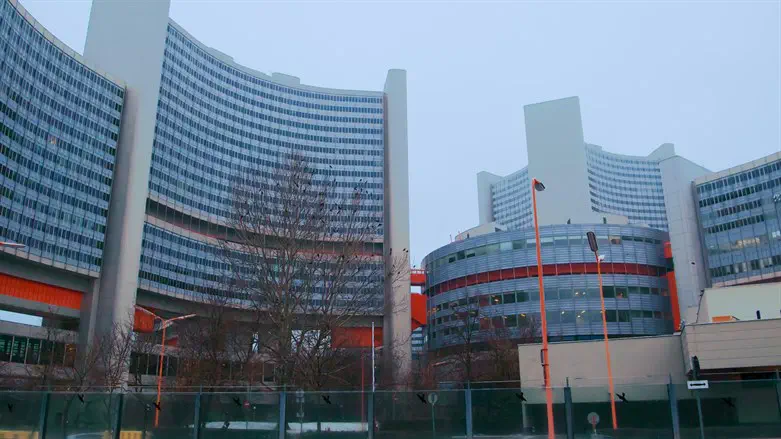
The resolution, co-sponsored by allies like Russia and China, was pulled at the last minute from a vote before the annual gathering of the UN’s nuclear watchdog, the International Atomic Energy Agency (IAEA).
Western diplomats, speaking anonymously to reveal internal discussions, confirmed that the withdrawal came after intense lobbying by the US, which reportedly threatened to reduce funding to the IAEA if the resolution passed and if the agency moved to curtail Israel's rights within the organization. The U.S. has previously taken similar action; in 1981, aid to Israel under the IAEA's technical assistance program was suspended after an Israeli strike on an Iraqi nuclear reactor.
Speaking at the IAEA’s General Conference, Iran’s UN Ambassador Reza Najafi announced that “guided by the spirit of goodwill and constructive engagement, and at the request of several member states,” Tehran would defer action on the draft until next year.
The resolution had contained a paragraph that “strongly condemned” the “deliberate and unlawful attacks carried out in June 2025 against nuclear sites and facilities of the Islamic Republic of Iran,” adding that it constituted a “clear violation of international law.” It also “reaffirmed” that “all states must refrain from attacking or threatening to attack peaceful nuclear facilities in other countries.”
The resolution came after Israel and the US launched strikes on Iranian nuclear and military sites in June.
Earlier in the week, Mohammad Eslami, the head of Iran’s civilian atomic energy organization, told the conference he expected member states to “take appropriate measures in response to these unlawful attacks on nuclear facilities.” He also accused the US of making “recent threats… as well as the exertion of political pressure on countries and the instrumental use of the Agency.”
Howard Solomon, the U.S. chargé d’affaires, dismissed the draft as a “deeply inaccurate picture of recent events,” stating that it “distorted international law and selectively quoted from the IAEA statute.” He added that had the resolution been put to a vote, “it would have been overwhelmingly defeated.”
The resolution’s withdrawal coincides with a major push by US allies to reimpose UN sanctions on Iran over its nuclear program. The so-called “E3” - Britain, France, and Germany - initiated a 30-day process at the end of August to trigger the "snapback mechanism," which would restore UN sanctions against the Iranian regime.
The E3 had offered to delay the snapback for up to six months to allow for serious negotiations. This offer was conditional on Iran restoring access for UN nuclear inspectors and engaging in talks with the US
Iran has shown no indication of a willingness to resume talks with Washington and has stated it is still “refining” its cooperation with the IAEA. Iran’s security chief Ali Larijani said recently that Tehran was open to talks with the US, but would not accept restrictions on its missile program.