

The Washington Post revealed in an exclusive report on Friday the reason for the fact that Israel's official announcement of its airstrike against senior Hamas leaders in Qatar on Tuesday was missing the Mossad’s lack of involvement.
According to two anonymous Israelis with knowledge of the matter, Israel’s external intelligence agency had specifically declined to carry out a plan it had recently drawn up to eliminate the Hamas officials with agents on the ground.
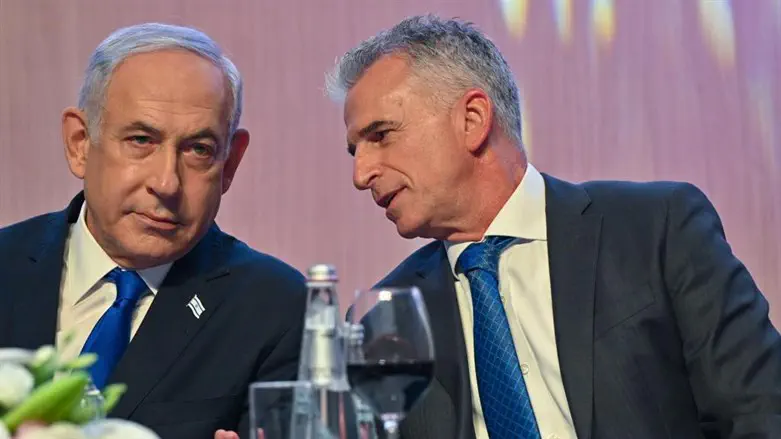
The report indicates that Mossad Director David Barnea opposed a ground operation in Qatar. Such an action, he argued, would likely rupture the relationship the Mossad had carefully cultivated with the Qataris, who have been hosting Hamas and mediating ongoing ceasefire talks. The Mossad’s reservations ultimately influenced the execution of the strike and, perhaps, its limited success, according to The Washington Post.
This opposition reflects a broader disagreement within the Israeli security establishment regarding the timing of the strike, which was ordered by Prime Minister Benjamin Netanyahu. While Israeli officials broadly agree that all Hamas leaders should eventually be pursued and eliminated, many questioned the wisdom of an operation in Qatar, a key US ally.
The timing was particularly sensitive, as Hamas officials were gathering in Doha to consider a new proposal from President Donald Trump to free Israeli hostages in exchange for a ceasefire.
Instead of deploying Mossad operatives, Israel resorted to a secondary option: launching 15 fighter jets that fired 10 missiles from afar. Hamas stated the airstrike failed to kill senior officials, including its acting leader Khalil al-Hayya. The attack, Hamas claimed, instead killed several relatives and aides of its delegation, as well as a Qatari officer.
A person familiar with the operation noted, “Israel did not get who they wanted.”
One Israeli source commented on the Mossad’s hesitation, telling The Washington Post, “This time, Mossad was unwilling to do it on the ground,” adding that the agency views Qatar as an essential intermediary. Another Israeli questioned the timing of the operation, saying, “We can get them in one, two, or four years from now, and the Mossad knows how to do it. Why do it now?”
Qatar has publicly condemned the strike as “state terrorism” and said it would be “reassessing” its role as a mediator. In response, Netanyahu stated on Wednesday, “I say to Qatar and all nations who harbor terrorists, you either expel them or you bring them to justice. Because if you don’t, we will.”
(Israel National News' North American desk is keeping you updated until the start of Shabbat in New York. The time posted automatically on all Israel National News articles, however, is Israeli time.)