

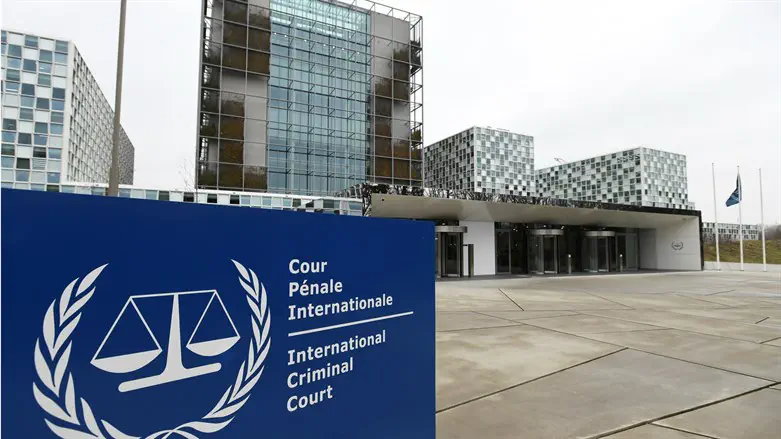
The International Criminal Court (ICC) on Wednesday rejected the new sanctions imposed by the United States on four of its personnel, condemning the move as "a flagrant attack against the independence of an impartial judicial institution."
The sanctions target judges and two deputy prosecutors, following earlier measures against other ICC staff.
The ICC's response highlighted the global implications of the U.S. action. The court stated that the sanctions are also "an affront against the Court’s States Parties, the rules-based international order and, above all, millions of innocent victims across the world."
The United Nations echoed the court's concerns. UN Spokesman Stéphane Dujarric told journalists that the decision "imposes severe impediments on the functioning of the office of the prosecutor." He emphasized, "Judicial independence is a basic principle that must be respected, and these types of measures undermine the foundation of international justice.”
Despite the pressure, the ICC affirmed its commitment to its mission. The court reiterated that it "stands firmly behind its personnel and victims of unimaginable atrocities" and "will continue fulfilling its mandates, undeterred, in strict accordance with its legal framework as adopted by the States Parties and without regard to any restriction, pressure or threat."
The measures announced by Secretary of State Marco Rubio on Wednesday target ICC judges Kimberly Prost of Canada and Nicolas Guillou of France, along with deputy prosecutors Nazhat Shameem Khan of Fiji and Mame Mandiaye Niang of Senegal. According to the State Department, they were sanctioned for efforts to investigate and prosecute nationals of the United States and Israel without consent.
Rubio said the decision reflects Washington’s rejection of what he called the ICC’s “politicization, abuse of power, disregard for our national sovereignty, and illegitimate judicial overreach.” He emphasized that the United States views the Court as a national security threat and pledged to take “whatever actions we deem necessary to protect our troops, our sovereignty, and our allies.”
The sanctions prohibit Americans and US financial institutions from conducting business with the four ICC officials and block any assets they hold in the United States.
In June, the Trump administration sanctioned four other ICC judges. Two of the sanctioned judges authorized the arrest warrants for Prime Minister Benjamin Netanyahu and former Defense Minister Yoav Gallant which the court issued last November. The others authorized an ICC investigation into abuses by US personnel in Afghanistan.
Previously, the US added Karim Khan, the ICC Chief Prosecutor, to its Specially Designated Nationals and Blocked Persons List, actively sanctioning him.