


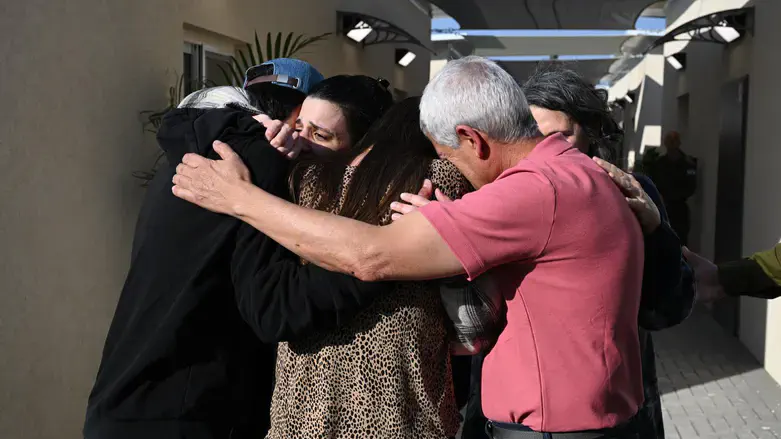
For 482 days, Arbel Yehud was held captive in the Gaza Strip, in complete isolation, enduring hunger, abuse, and violence. In an interview with Channel 12 News broadcast on Friday evening, she recounted the harrowing moments, the fading hope - but also the strength she drew from memories and her love for her friends and boyfriend, Ariel Cunio, who remains in captivity.
"There? The loneliest," Arbel said when asked about the feeling of isolation. "First, you wake up and realize you’re still alive. All that’s left is to hold on to hope and pray that one day you’ll get out. There are very, very, very tough moments when you briefly want to end it yourself, and those are truly terrifying moments."
When asked if she reached such a moment, she replied, "Yes. But I never lost that one percent of hope, even if it was just the last fumes."
Describing the moment of her abduction from Kibbutz Nir Oz on October 7, she recounted how she and Ariel were separated: "In the vehicle. We held hands the whole time. He said a sentence, I said a sentence. ‘Our lives are gone.’ And then, they just… tore him away. I didn’t even get to say goodbye. I didn’t get to look into his eyes. I remember screaming for him, trying to move toward him, but they silenced me very quickly."
During her captivity, she was exposed to images of releases through Al Jazeera broadcasts: "In the last month and a half to two months, a TV arrived… Suddenly, I saw that it was so many people from the kibbutz."
She struggles to recall the moments of her return precisely: "At first, we were close to the Red Cross vehicle, then we turned right and moved away… There was fear, you know, because of the chaos, that there might be shooting in all directions. Later, in the crowd, I was in complete shock. There are parts I don’t remember."
But even now, after physically returning, her emotions remain captive: "Physically, yes, but not in my heart or mind. I’m there. You can’t leave a place like that. Knowing you got out, and others didn’t."
When asked if Ariel knows she’s alive, she replied, "To be honest, I don’t know. But I think… maybe, for the sake of psychological terror, they probably told him."
To the question, "How alone are you?" she answered, "Not as alone as I was there, but I feel alone."
She channels her energy not into herself but into the fight to bring the hostages back. On Ariel’s birthday, she organized a soccer game in his memory. On her feelings today, she said, "I feel like I’m still restrained, like in captivity. As if everything is inside."
When asked to address the decision-makers, she replied, "The military pressure endangers the hostages, kills them, harms them physically and mentally." Finally, she said with pain, "I don’t know if they don’t understand. I think they just don’t care."
(Israel National News' North American desk is keeping you updated until the start of Shabbat in New York. The time posted automatically on all Israel National News articles, however, is Israeli time.)