

Less than a month after the deadly attack on October 23, 2026, during a funeral service at a church in the village of Hamoud in Jordan's Karak Governorate, its perpetrators were sentenced. Nine people were murdered and 40 others were wounded in the attack. A Jordanian court sentenced the three terrorists to death by hanging, while others involved received prison sentences.
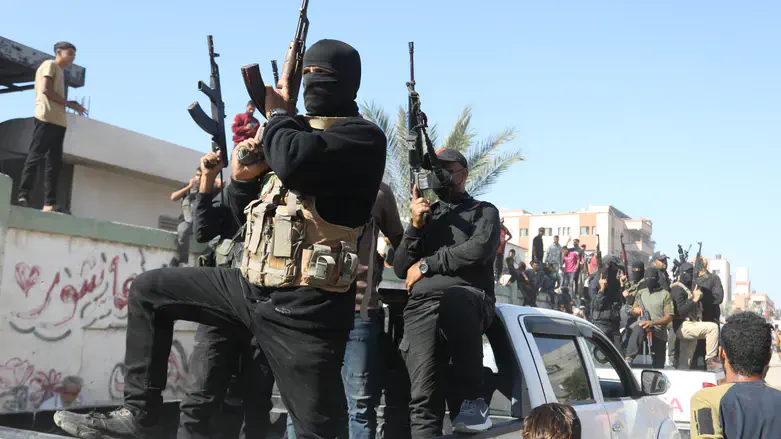
The same cannot be said of the terrorists from Gaza who brutally massacred some 1,200 people in Israel within hours on Simchat Torah, October 7, 2023. Those murdered included entire families, women, men, elderly people and children from communities near the Gaza border, young people celebrating at and around the Nova festival, and members of the security forces.
On the morning of October 23, 2026, during a funeral service at the Greek Orthodox church in the Jordanian village of Hamoud, home to a large Christian community, three terrorists affiliated with ISIS emerged from a civilian vehicle and opened fire indiscriminately on mourners. After prolonged gunfire and shooting victims to ensure they were dead, the terrorists fled the scene unharmed and without encountering resistance.
Jordanian security forces launched an extensive manhunt for the terrorists, while the country's shocked leadership spoke of revenge. During the manhunt, the Jordanian Air Force struck targets in southern Syria that, according to official Jordanian reports, were affiliated with ISIS. Eight Syrian civilians, including children and elderly people, were killed in those airstrikes. It should be noted that no footage or testimony was released to substantiate claims that dozens of terrorists had been hit, as reported by Jordanian state media, citing a "senior military source."
Three days later, on October 26, 2026, the terrorists, two brothers and a relative, were located hiding in an abandoned house a few kilometers from the attack site. They were wounded and arrested following a prolonged battle with Jordanian security forces, and were found in possession of weapons and large quantities of ammunition.
When it comes to the Simchat Torah massacre on October 7, 2023, use of the word "revenge," as the Jordanians declared immediately after the toll of the church attack became known, is for some reason unacceptable in Israel. Over time, the massacre of Israeli civilians has been pushed to the margins of the discussion in certain circles, while attention has shifted to the "suffering" of imprisoned terrorists and their supporters who remained in the Gaza Strip.
The physical massacre of Israeli civilians also became an information campaign against Israel and IDF soldiers, around the world and even within Israel. With the assistance of post-Zionist figures, including Knesset members, media figures and former senior security officials, Israel was accused of genocide, and the IDF was accused of murdering babies. In my view, slander against Israel and its soldiers was spread through various means, including highly publicized demonstrations and protests, reports on the Sde Teiman and Force 100 affair that I contend included fabricated information, and purported documentaries, such as the notorious NAZA (Collateral Damage).
Once the terrorists in Jordan were captured alive, they were subjected to intensive questioning despite their injuries, some of them serious. Jordanian prosecutors filed serious charges against them and two additional defendants who had assisted them and sold them the weapons used in the attack.
The trial opened at the State Security Court in Amman on November 4, 2026, under heavy security, with the media barred and only relatives of those murdered in attendance. Proceedings lasted 11 days, during which eyewitnesses testified, positively identifying the terrorists and describing their actions.
On November 15, 2026, the State Security Court convicted the defendants of carrying out terrorist acts, conspiracy, using weapons, disseminating the ideology of a terrorist organization and financing terrorism. The three terrorists who carried out the shooting were sentenced to death by hanging, and the two accomplices were sentenced to six years in prison.
More than three years have passed since the horrific massacre of October 7, 2023. Thousands of terrorists who participated in the attack, during which Israeli civilians and anyone else they encountered were subjected to murder, abduction, abuse, and rape, remain in Israeli detention facilities without their trials having begun and without being brought to justice.
This is despite the extensive evidence and testimony held by Israel's security establishment, some of it collected thanks to the terrorists' own recordings. They boasted of their actions, documented them, and distributed the footage in real time to their families, Arab media outlets, and social media. It is important to recall this self-recorded footage, also to underscore the existence of evidence that does not depend on statements obtained during interrogation.
Will these terrorists ever face the full force of the law in Israel? Legislation on the death penalty for terrorists advanced in Israel over the past year, but the punishment has yet to be implemented.
A future government dependent on the votes of Arab parties and anti-Zionist Arab and Jewish Knesset members, who I contend do not condemn terrorist organizations but do not hesitate to boycott Israel's leaders and condemn IDF soldiers and residents of Israeli settlements, might not leave the law in place.
Would such a government allow the execution of terrorists who committed crimes against humanity reminiscent in their severity of the crimes of the Nazis and their collaborators? And under such a government, would the possibility that these terrorists might one day be released from Israeli prisons still sound far-fetched?