

The IDF's Military Intelligence Directorate assesses that Hezbollah is highly likely to join another military campaign against Iran, should one break out, and resume attacks on Israel.
Galau Tzahal reported that, according to the intelligence assessment presented to the political leadership, the Lebanese terrorist organization could join the fighting at its outset or shortly afterward. The IDF is preparing accordingly for renewed fighting along the northern border while monitoring the organization's efforts to build up its capabilities in Lebanon.
One of the defense establishment's main concerns is Hezbollah's fleet of explosive drones, which the organization is working to expand and improve. According to Israeli assessments, Hezbollah currently possesses thousands of attack drones and is training additional operators while working to extend their range.
Particular attention is being paid to fiber-optic-controlled drones. Hezbollah used these weapons to strike IDF soldiers during the latest war, and there is still no adequate technological response enabling their effective interception.
During the latest war, 16 IDF soldiers were killed in Hezbollah explosive drone attacks. The defense establishment is monitoring the organization's attempts to increase its drone stockpile and expand their use ahead of a possible further confrontation.
According to information available to the IDF, Hezbollah operates facilities in Lebanon for assembling explosive drones. Civilian drones are brought into the country and then fitted with warheads containing explosives.
Alongside weapons production, the organization is working to expand its pool of trained operators. According to Military Intelligence assessments, many dozens of Hezbollah terrorists have already undergone training to operate explosive drones.
Another change identified by the IDF concerns attack ranges. Until now, Hezbollah has used drones with ranges of approximately 10 to 15 kilometers, but Israeli assessments indicate that the organization is working to acquire models capable of reaching greater distances.
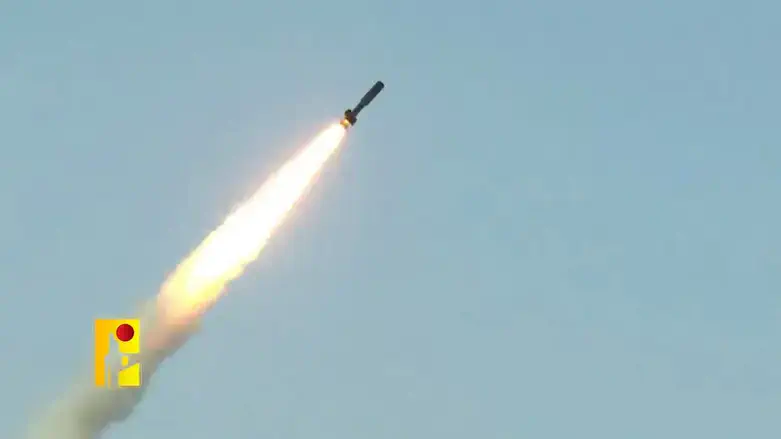
Preparations are also continuing for the rocket and missile threat. According to the IDF's unchanged assessment, Hezbollah retains approximately 10,000 rockets and missiles. The vast majority have ranges that allow them to strike northern communities, while only a very small proportion can reach more distant targets.
In Lebanon's Bekaa Valley, Hezbollah maintains underground storage facilities that held long-range missiles. Israel previously struck the entrances to these facilities, blocking access. According to available information, the organization has not yet attempted to retrieve the missiles remaining inside the damaged facilities.
Alongside aerial and rocket threats, the IDF is also preparing for the possibility of ground attacks against forces operating in the security zone in southern Lebanon.
The defense establishment is examining the possibility that Hezbollah cells could attempt to infiltrate the security zone, plant explosive devices, open fire on IDF soldiers or even attempt to abduct a soldier. According to assessments, such operations could take place at night or in foggy conditions, making the cells harder to detect.
A senior military official confirmed that the IDF is preparing to counter this threat, noting that operations had already been carried out in recent months against similar cells identified on the ground.