


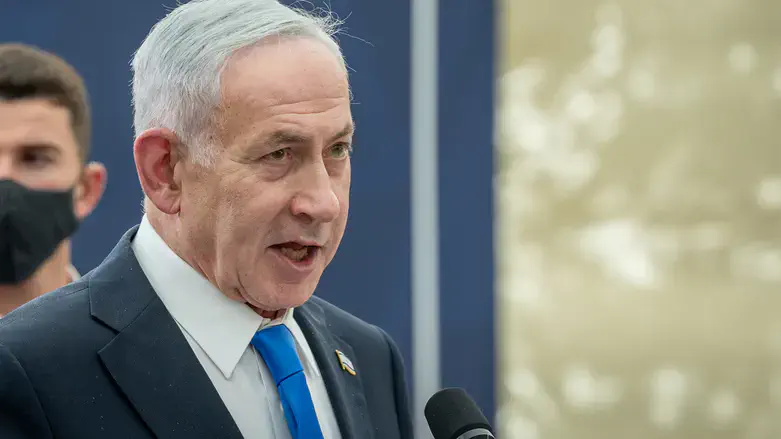
Sources close to Israeli Prime Minister Benjamin Netanyahu are advancing a proposal to form a national unity government with Yashar! party chairman Gadi Eisenkot, despite Eisenkot's pledge not to join a government led by Netanyahu.
According to a Maariv report, the plan under consideration could see Netanyahu offer Eisenkot a broad political partnership, potentially including a rotation agreement for the premiership and the formation of a coalition without the haredi parties, at least initially.
Those behind the initiative acknowledge that Eisenkot has so far given no indication that he is willing to discuss the proposal. At the same time, those promoting the idea believe that Eisenkot's political circumstances will make it difficult for him to maintain his refusal to sit with Netanyahu.
According to them, the anti-Netanyahu bloc exhausted its electoral potential in the recent elections, partly due to high voter turnout in the Arab community and Israelis traveling from abroad specifically to cast their ballots. Such turnout would likely be difficult to replicate in a repeat election, potentially allowing the right-wing bloc to secure a substantially larger majority.
One of the proposals would see Eisenkot offered a rotation agreement in which Netanyahu would serve as Prime Minister for the first two years before handing over the position to Eisenkot.
Sources close to Netanyahu explain that during this period, the Prime Minister would seek to complete initiatives concerning Iran and advance regional peace agreements before the end of US President Donald Trump's term in office.
Another possibility is that Netanyahu would avoid a rotation agreement altogether and instead offer Eisenkot a senior cabinet position.
Thus far, the anti-Netanyahu bloc has rejected the possibility of Eisenkot joining a Likud-led government.
Under the framework being promoted by Likud officials, the government would initially include Eisenkot, Otzma Yehudit led by National Security Minister Itamar Ben Gvir, and the Religious Zionist-Zehut party led by Finance Minister Bezalel Smotrich, but exclude the haredi parties.
Likud officials believe such an arrangement would allow Eisenkot to present a political achievement on the Draft Law, while enabling the haredi parties to join the government after the relevant legislation is completed.