


One day after the elections for the 26th Knesset, with vote counting still underway, the political race to form the next government is beginning. Alongside the expected negotiations between party leaders, Basic Law: The Government establishes the stages and deadlines within which the President and candidates for prime minister must act.
The first stage is the completion of the vote count and publication of the official election results. The Central Elections Committee has seven days from Election Day to publish the results, following the completion of the vote count, including the double-envelope ballots, and verification of the figures.
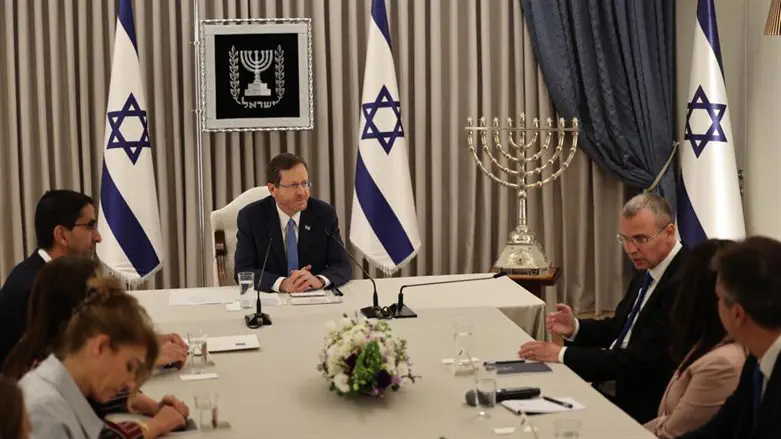
Once the results are published, the next stage will begin: consultations at the President's Residence. President Isaac Herzog has seven days to hold consultations with representatives of the factions elected to the Knesset, during which they will recommend the candidate they believe should be tasked with forming the government.
At the conclusion of the consultations, the President will assign the task to a member of the Knesset who has agreed to accept it. The President is not required to give the mandate to the leader of the largest party, but may instead choose the candidate whom he believes has the best chance of forming a government capable of winning the Knesset's confidence.
From the moment the mandate is received, the candidate will have 28 days to form a government. During this period, the candidate must conduct coalition negotiations, reach agreements with potential partners, and assemble a government capable of securing the Knesset's confidence.
If the candidate fails to complete the task within 28 days, the President may extend the period by up to an additional 14 days. This means that the first candidate could receive a total of 42 days to form a government.
If no government is formed by the end of that period, the President will have two options: assign the task to another Knesset member who has agreed to accept it, or notify the Knesset Speaker that he sees no possibility of forming a government.
If the President chooses a second candidate, that candidate will have another 28 days to form a government, with no possibility of an extension.
If the second candidate also fails, or if the President announces that he sees no possibility of forming a government, a 21-day period will begin during which at least 61 Knesset members may submit a written request to assign the task to a specific Knesset member who has agreed to accept it.
If such a request is submitted, the candidate will have an additional 14 days to form a government. If no request is submitted within the allotted time, or if the final candidate fails, the Knesset will be dissolved and Israel will head to another election.
The legally mandated timetable gives the political establishment several opportunities to reach agreements. However, in light of the election results and the emerging difficulty of assembling a coalition majority, the central question is no longer merely which candidate the President will task with forming the government, but whether any of the candidates will succeed in putting together a coalition that will spare Israel another round of elections.