
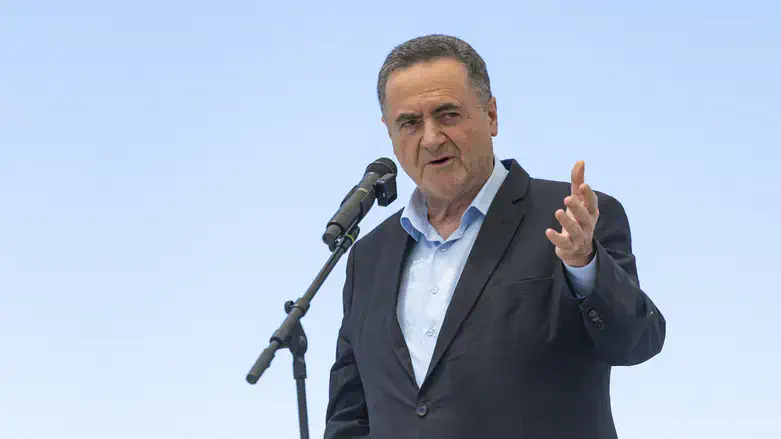
Defense Minister Israel Katz on Monday evening criticized a High Court of Justice ruling ordering the state to formulate a plan and timetable for allowing residents of the Jenin, Tulkarm, and Nur Shams refugee camps to return to their homes. He made clear that he intends to maintain the IDF’s military presence in the camps, even if special Knesset legislation is required.
The ruling followed a petition filed by Palestinians from the area against the head of Central Command, the defense minister, and the national security minister. The High Court ordered the state to develop a plan subject to security needs and conditions on the ground, despite the security establishment’s position that the conditions for the residents’ return were not yet in place.
The case was heard by Supreme Court President Isaac Amit and Justices Alex Stein and Khaled Kabub.
Responding to the ruling, Katz said: “The High Court must refrain from involving itself in IDF operational activities in Judea and Samaria that are intended to protect the lives of soldiers and civilians."
Katz explained that upon taking office, he and Prime Minister Benjamin Netanyahu formulated a change in Israel’s security doctrine in Judea and Samaria. The new approach called for ending the practice of repeated raids on refugee camps and replacing it with a prolonged military presence on the ground.
According to Katz, the IDF took control of the Jenin, Tulkarm, and Nur Shams refugee camps, where Iran-backed terrorist organizations had operated.
“The Jenin, Tulkarm, and Nur Shams refugee camps had become terrorist strongholds, where Iran-backed jihadist terrorist battalions operated and launched attacks throughout Judea and Samaria and inside Israel," he said.
Katz noted that all 40,000 residents of the camps had evacuated and that the IDF had eliminated terrorists, destroyed terrorist infrastructure - including many homes and narrow streets rigged with explosives - and remained in the camps permanently.
As a result, he claimed, terrorist activity in Judea and Samaria had fallen by 80% to its lowest level ever, while the ability to carry out attacks inside Israel had been sharply reduced.
“Many lives have been saved and many injuries prevented - but the challenges remain considerable," he said.
Katz stressed that maintaining a long-term IDF presence in the camps was “not a legal matter, but an operational and security necessity" to protect Israeli soldiers and civilians from serious threats and from outside jihadist elements backed by Iran and the Muslim Brotherhood seeking to promote October 7-style terrorist attacks in Judea and Samaria.
“It is not the High Court’s place to intervene in security considerations of this kind, just as it is not its place to intervene in operational activities in Gaza, Syria, Lebanon, or Iran," he added.
Concluding his remarks, Katz said his position was clear and that he intended to ensure it was reflected in every future discussion of the issue.
“I do not intend to compromise on this matter, even if it requires special legislative procedures in the Knesset. This is our duty to our soldiers and citizens, and we will fulfill it," he declared.