
An Israeli man who was traveling with his wife in Namibia died last Wednesday, during the Sukkot holiday, after suffering cardiac arrest. His coffin is expected to be flown to Israel tomorrow for burial.
Following his death, ZAKA’s international unit worked with the Foreign Ministry and Rabbi Yosef Rahimi, the Chabad emissary in Namibia, to secure the release of his body and arrange its transfer to Israel while ensuring that his dignity was respected.
At one point, local authorities announced that they intended to perform an autopsy. In an effort to prevent it, Rabbi Rahimi arranged a video call with Yossi Landau, ZAKA’s Lachish district operations officer, so he could explain the halachic sensitivity and ask the pathologist to limit the procedure as much as possible.
But the call took an unexpected turn. The pathologist looked at Landau on the screen and said, “You look familiar. I know you from somewhere."
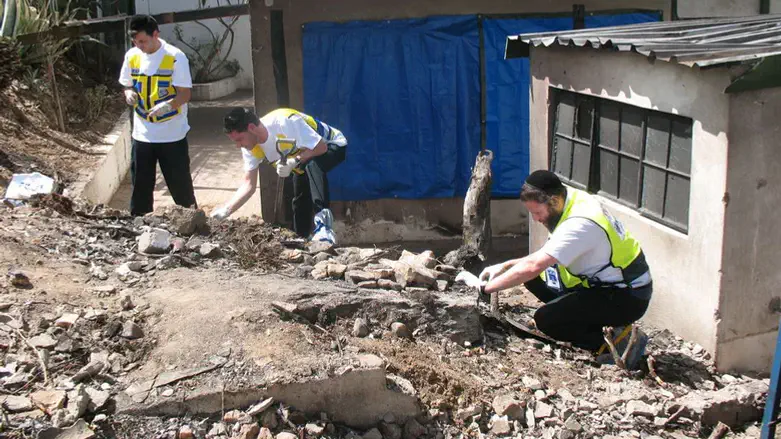
It soon emerged that the two had met about 19 years ago following a plane crash in Namibia that killed five Israelis. ZAKA volunteers traveled to the country at the time, worked at the crash site, helped identify the victims and assisted in bringing them to Israel for burial.
According to ZAKA, the pathologist remembered Landau and the organization’s work at the time, particularly its efforts to ensure the dignity of the dead.
Landau explained the halachic significance of the autopsy and asked that it be avoided. Following their conversation and their previous acquaintance, the doctor agreed and decided not to perform the autopsy.
“When the doctor saw me on the screen, he immediately said, ‘You look familiar,’" Landau recalled. “We remembered that we had met 19 years ago, after the plane crash in which five Israelis were killed. He remembered our work and our efforts to preserve the dignity of the dead.
“He was very moved by our reunion, understood the significance and agreed to release the deceased without an autopsy at all. It was an emotional encounter to see how ZAKA’s work nearly two decades ago helped us once again preserve the dignity of the dead."