

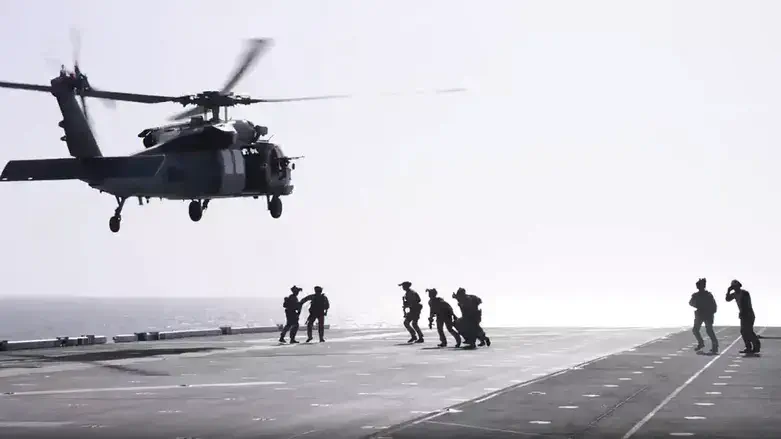
Eight US Marines were injured in an Iranian cruise missile strike on a maritime vessel operating in the Strait of Hormuz on September 14, NBC News reported Sunday, citing three US officials. The incident had not previously been publicly reported.
The Marines did not suffer serious injuries, but experienced smoke inhalation and symptoms consistent with concussions, including headaches, raising the possibility of traumatic brain injuries, according to the officials.
Seven of the Marines were enlisted personnel and one was an officer. All returned to duty shortly after the attack, which occurred while they were serving as part of a battalion landing team.
The officials said the Marines were not aboard a US Navy ship and would only describe the vessel as a maritime vessel. The Defense Department did not publicly report an attack against US forces in the region on September 14. A US Central Command spokesperson declined to comment, while the Defense Department referred questions to CENTCOM.
The injuries were added to the Pentagon’s Defense Casualty Analysis System, or DCAS, roughly 10 days after the attack. The system showed 861 US service members injured in the war with Iran as of Wednesday. One US official said casualty reporting can be delayed because some symptoms do not immediately emerge and the database does not update in real time.
DCAS does not provide details about the circumstances surrounding the injuries of the eight Marines, including where or when they were injured.
The incident comes amid continued questions over the number of US military casualties in the conflict, which began in February. Unlike in some previous overseas wars, casualty information has not been consistently disclosed, and the Pentagon recently reduced its reported number of deaths from the summer after changing how some fatalities were classified.
Meanwhile, the US military continues enforcing a naval blockade on vessels attempting to enter or leave Iranian ports through the Strait of Hormuz. The blockade, first imposed in April, involves coordination with commercial vessels to facilitate safe passage through multiple designated shipping lanes. US forces are also continuing efforts to intercept Iranian projectiles and clear the lanes of mines.
An agreement reached in June temporarily suspended the US measures in return for unrestricted commercial shipping, but Washington reinstated the blockade in July after fighting resumed.
The measures have been followed by a gradual increase in commercial traffic through the Strait of Hormuz after activity there had largely stalled. However, according to one US official, Iran’s Islamic Revolutionary Guard Corps continues attempting to attack ships almost daily.