

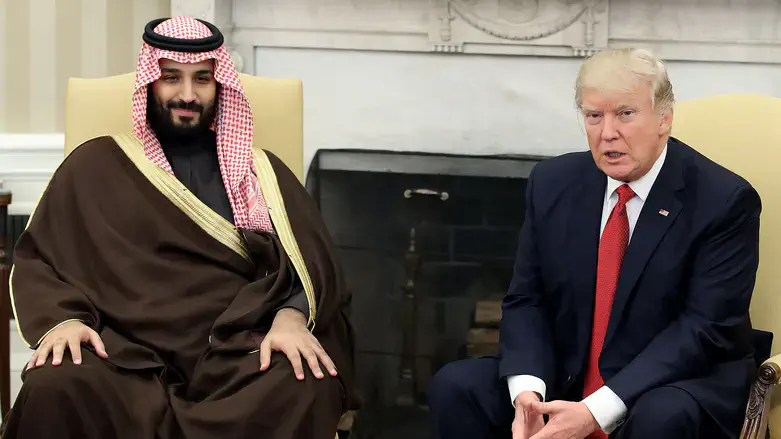
Saudi Arabia has not ruled out developing nuclear weapons, according to a US intelligence community assessment contained in classified documents provided to Congress, US officials told The Washington Post on Friday.
The assessment is adding to concerns among lawmakers over President Donald Trump’s agreement to help Riyadh establish a civilian nuclear program. Critics fear the arrangement could provide Saudi Arabia with a path toward developing nuclear weapons and potentially trigger a regional arms race.
The agreement would allow American companies to launch tens of billions of dollars in nuclear energy projects in Saudi Arabia. The Trump administration says the initiative is intended to deepen US-Saudi relations and discourage Riyadh from expanding cooperation with adversaries such as Russia and China.
When the agreement was announced in July, the administration said it “will advance US and regional security by upholding high standards of nuclear safety, security, and nonproliferation and strengthening the United States’ competitive edge in civil nuclear technology."
Democratic lawmakers have increasingly challenged the deal, particularly over provisions that could eventually permit Saudi Arabia to enrich uranium to nearly 20 percent. They warn that nuclear material could potentially be diverted toward military use.
Congress is currently conducting a 90-day review of the agreement. Lawmakers could seek to block it if they secure sufficient support.
“With this deal, the Trump administration is departing from precedent, adopting looser restrictions, and caving to Saudi demands by agreeing to a process that is all but certain to allow Riyadh to acquire the means to enrich uranium and possibly develop nuclear weapons," a group of Democratic senators, led by Sens. Ed Markey (Massachusetts) and Jeff Merkley (Oregon), said Friday in a letter to Secretary of State Marco Rubio.
The classified material sent to Congress last month also included an assessment from the State Department, according to US officials who spoke anonymously because of the sensitivity of the issue. The department’s assessment was described as more optimistic about the agreement’s safeguards and the assurances provided by Riyadh.
The disclosures come after a bipartisan group of senators previously urged the administration to declassify information concerning the proposed civilian nuclear agreement, including two classified “side letters" negotiated with Saudi Arabia.
The Saudi government did not directly answer questions from The Post but referred the newspaper to an earlier statement by Energy Minister Abdulaziz bin Salman, who said the program would be “peaceful" and developed with “the highest levels of responsibility and transparency."
The State Department defended the agreement, telling The Post that the United States “does not and will not support a Saudi nuclear weapon program."
“It reflects a proactive, realistic approach to the need to expand and strengthen nuclear energy cooperation while maintaining the strongest nonproliferation standards diplomatically achievable."
The CIA declined to comment.
Under the agreement, Saudi Arabia’s uranium enrichment would initially be capped at less than five percent. Following an additional study and a written agreement, however, the ceiling could rise to 20 percent. The Wall Street Journal previously reported on the enrichment provisions. Uranium enriched to 20 percent is significantly below weapons grade but can be enriched further relatively quickly.
The Trump administration has argued that the agreement includes the nonproliferation safeguards required under US law.
Trump has also said Saudi Arabia’s participation in the Abraham Accords was a condition for the nuclear agreement.
“I just say that in order to do it, they have to be a member of the Abraham Accords, which have been very successful. But it's time now that they do it," Trump told reporters two days after the agreement was signed.
The Abraham Accords were negotiated during Trump’s first administration and led to diplomatic normalization between Israel and several Arab states.
Saudi Arabia and Israel had been pursuing a potential normalization agreement before Hamas’ October 7, 2023 attack on Israel. Riyadh subsequently suspended the US-backed process following the attack.
(Arutz Sheva-Israel National News' North American desk is keeping you updated until the start of Sukkot in New York. The time posted automatically on all Israel National News articles, however, is Israeli time.)