
Behind the legal proceedings, budget clauses, and battle to release the government funds was a small and unusual story that, until now, was known only to a few.
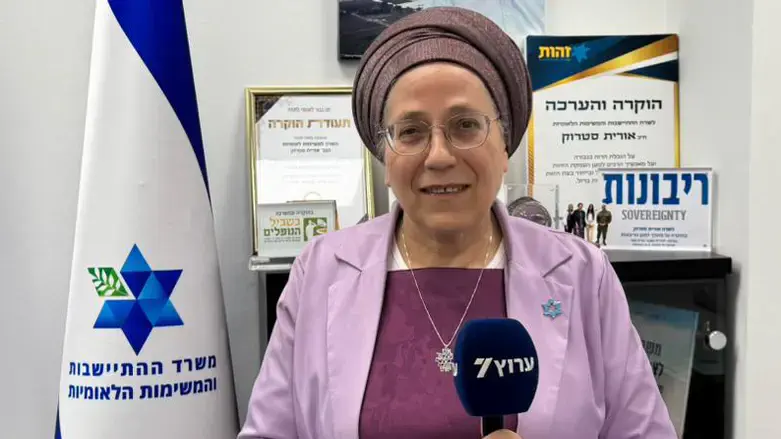
Settlement and National Missions Minister Orit Strock, who had recently been frustrated by the delay in transferring funds as a result of a petition to the Supreme Court, decided to do something entirely different as well: On Yom Kippur, she used her own money to purchase the honor of opening the prayer hall at the Cave of the Patriarchs.
The price: 2,500 shekels.
Strock dedicated the opening of the hall to the success of the effort to release the frozen funds, in the hope that the Supreme Court proceedings would come to an end and the budgets could be transferred to their intended recipients.
For Strock, the issue was not merely a legal or budgetary dispute. Behind the numbers were, among others, organizations involved in National Service and communities in northern Israel, where the effects of the funding shortage were already being felt. Community coordinators had even begun to be laid off due to difficulties in continuing to fund their work.
Then came the Supreme Court hearing, during which the justices recommended that the petitioners withdraw their petition. The petitioners accepted the recommendation and withdrew it, clearing the way for the continued transfer of the funds that had been frozen as a result of the proceedings.
Shortly after the development in court, Strock recalled the 2,500 shekels she had spent out of her own pocket on Yom Kippur.
In a message she sent to someone with whom she had discussed the opening of the hall, she summed up the episode in one short sentence: "It was worth every shekel."
And so, at least from Strock's perspective, behind one of the budgetary battles that reached the Supreme Court lies another story as well: the opening of the prayer hall at the Cave of the Patriarchs - and 2,500 shekels from the minister's own pocket.