

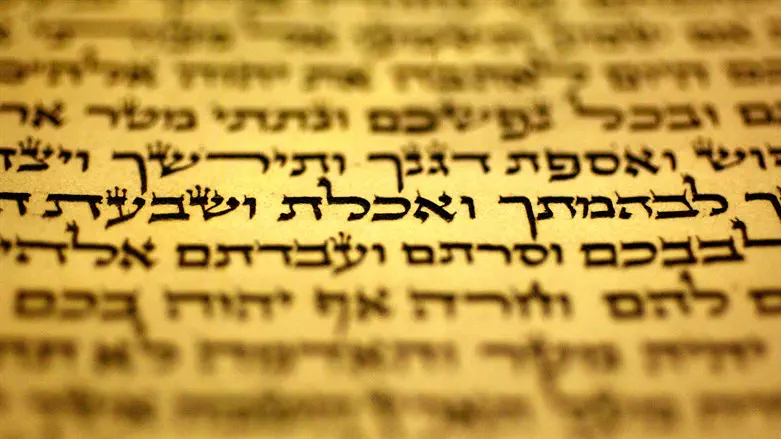
Ahead of the High Holy Days, many observant Jews traditionally have the mezuzahs in their homes and their tefillin checked to ensure that they remain kosher.
On Tuesday, concerning findings were revealed in Ashdod regarding the condition of mezuzahs and tefillin belonging to many local residents.
According to the city's Religious Council, a comprehensive subsidized inspection campaign launched at the beginning of the Hebrew month of Elul under the leadership of Religious Council chairman Rabbi Ovadia Dahan has resulted in the examination of hundreds of pairs of tefillin and hundreds of mezuzahs. Some were found to contain serious halachic defects.
The inspections are carried out at an authorized halakhic institute using a two-stage process: a meticulous manual examination by qualified inspectors, together with a computerized scan of the lettering.
Results accumulated over recent weeks showed that mezuzahs in many homes contained entire words that had been erased or letters that had deteriorated and separated from the parchment.
The Religious Council explained that most of the damage was caused by environmental factors, including exposing tefillin to extreme heat, such as leaving them inside vehicles where temperatures can reach approximately 60 degrees Celsius, as well as water and moisture entering mezuzah cases while doorposts are washed during pre-holiday cleaning.
Ashdod Chief Rabbi Haim Shimon Pinto, who personally examined the invalid parchments presented to him, expressed concern over the findings while emphasizing the importance of the initiative.
"Thanks to these meticulous inspections, residents were saved from reciting blessings in vain and from failing to fulfill a positive commandment," he said.
In light of the number of invalid items discovered and the demand for inspections, Rabbi Pinto ordered the initiative extended for another month, until after the holiday period.
Religious Council chairman Rabbi Ovadia Dahan emphasized the strict standard applied during the inspections, saying, "We established an iron rule: 99% kosher is 100% invalid. Just as with safety, there is no room for approximation in halakha."
To make the service accessible to households throughout the city, the parchment inspection itself is being provided free of charge. Opening and resealing tefillin is subsidized by more than 50% and costs 100 shekels, while a mezuzah inspection costs ten shekels.