

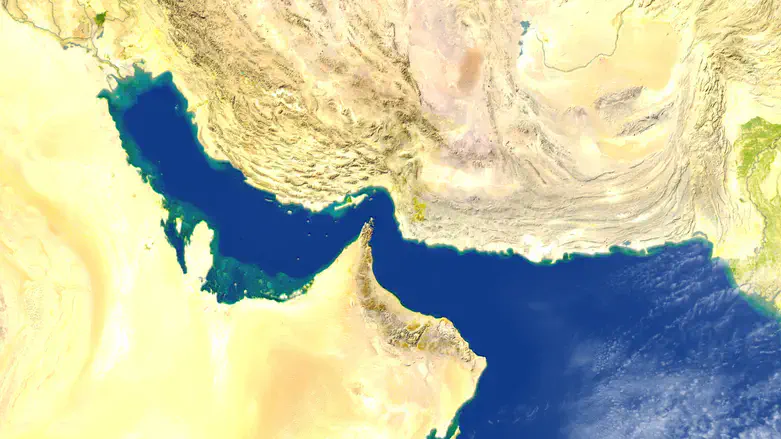
Iran plans to establish a new “prohibited zone" near the strategic Strait of Hormuz, the country's top security chief Mohsen Rezaei announced Sunday, according to Iranian state media.
“In the coming days, a prohibited zone will be announced outside the Strait of Hormuz. This zone will start from the US Navy’s blockade line and include areas of the Persian Gulf. Any ship entering this new zone will be placed on the sanctions list" of Iran, Rezaei told state television.
The announcement came as Tehran also moved to increase fuel costs for consumers exceeding the lower petrol quotas, amid intensifying US economic pressure against Iran.
Under Iran's existing three-tier system, consumers pay 1,500 tomans per liter for their first 60 liters each month, followed by 3,000 tomans per liter for the next 50 liters. Any additional consumption is currently priced at 5,000 tomans per liter. The toman is an informal unit equivalent to 10 Iranian rials.
Government spokeswoman Fatemeh Mohajerani said Sunday that the highest-tier price would be doubled to 10,000 tomans, or approximately 4.5 US cents, beginning September 8.
“The rate will increase to 10,000 toman rials from the morning of September 8," Mohajerani said in remarks carried by state media.
“Different numbers were mentioned in expert meetings but because the president had promised the people, the rate of 10,000 tomans was set," she added.
Mohajerani later clarified that prices for the first two petrol tiers would remain unchanged.
The measures come as Iran's currency continues to weaken. The rial was trading above 2.2 million to the US dollar on the black market Sunday, according to websites tracking exchange rates. Before the US-Israel war against Iran began on February 28, the currency was trading at approximately 1.7 million rials to the dollar. It fell to what was then a record low of 1.8 million in late April.
Washington has intensified its economic campaign against Tehran. The US Treasury Department launched “Operation Economic Outcast" last week, with Treasury Secretary Scott Bessent describing it as an unprecedented campaign aimed at isolating Iran economically and cutting off revenue available to the Iranian regime.
The economic pressure has accompanied renewed US military action against Iran. American strikes resumed this past week, hitting targets around Qeshm Island, Chabahar and Bandar Abbas, near the Strait of Hormuz.
On Friday, three days after the US strikes, President Donald Trump warned that American forces could soon target Pickaxe Mountain, a heavily fortified Iranian facility where Tehran has allegedly been expanding its nuclear infrastructure.
Trump reiterated in the Oval Office that Iran would not be allowed to obtain a nuclear weapon.
"Iran will not have a nuclear weapon," he said, before adding, "We may hit Pickaxe very soon...if there was anything going on with Pickaxe."