
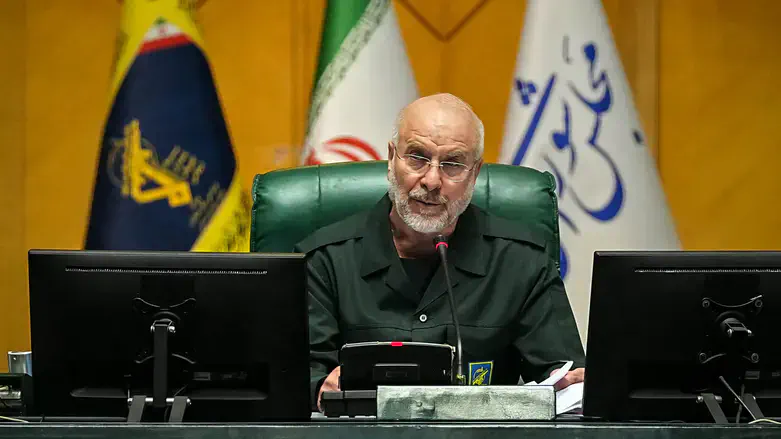
Iranian Parliament Speaker Mohammad Bagher Ghalibaf said Sunday that Tehran will not reopen the Strait of Hormuz unless its demands are fulfilled and the United States meets its commitments.
Speaking in a statement carried by the semi-official Fars News Agency, Ghalibaf said Iran had demonstrated during the past seven months that it could withstand attacks and pressure.
"Over the past seven months, we have shown that we are not helpless in the face of aggression," Ghaliaf said.
Ghalibaf, who headed Iran’s negotiating delegation to Islamabad in April, said Tehran intends to pursue diplomacy while continuing to confront its adversaries.
"We must both fight and negotiate," said Ghalibaf, who led the Iranian negotiating delegation to Islamabad in April.
He said Iranian demands had already been transmitted through mediators and that Tehran would not accept negotiations based on deception or unilateral terms.
"Our messages have been conveyed and our conditions have been clearly explained to the other side through mediators, and the enemy knows very well that the path of deception and one-sided imposition is closed," Ghalibaf continued.
"Until these conditions are met, the legitimate rights of the Iranian people are recognized and the Americans fulfill their commitments, there will be no opening for a return to the previous conditions for negotiations or for the Strait of Hormuz to be opened," he said.
Ghalibaf also declared that the regional balance of power was changing.
"Today, the old American order in West Asia has collapsed, and it is the Islamic countries of the region that must implement a new order," Ghalibaf added.
His comments followed a statement on Saturday by Mohsen Rezaei, secretary of Iran’s Supreme National Security Council, who said that Tehran had delivered seven conditions to Washington for the resumption of negotiations. He did not disclose all seven publicly.
Later on Sunday, Ghalibaf responded on social media to a JPMorgan report saying the bank no longer had a baseline scenario for how the conflict would end. Referring to the strategic waterway, he wrote, This endgame cannot be modeled. It will be opened, and Iran's hand is already on the lever."
The JPMorgan report, published September 17, said the bank could no longer establish a baseline outlook for the conflict, reflecting heightened uncertainty surrounding the war and its impact on energy markets.
The Strait of Hormuz has become a central point of tension amid the continuing confrontation between Washington and Tehran. Iran has maintained its closure of the waterway while the United States has imposed a naval blockade aimed at restricting Iranian petroleum exports and maritime traffic.
A June agreement temporarily suspended the US measures in exchange for unrestricted commercial shipping, but Washington reinstated the blockade in July following renewed fighting.
Iran also announced last week that it would establish a new "prohibited zone" near the Strait of Hormuz. Rezaei said the area would extend beyond the strait into parts of the Persian Gulf.
Meanwhile, US President Donald Trump has said he is considering several possible approaches to Iran, including further military action, continued economic pressure or a negotiated agreement.
Speaking to Fox News on Sunday, Trump said he was weighing several options, including additional military action, maintaining economic pressure or reaching an agreement with Tehran.
Iranian President Masoud Pezeshkian said Sunday that Tehran does not seek war but will not submit to pressure or intimidation. He also said Iran remains committed to its agreements despite its distrust of its adversaries.
“We do not want war and conflict and consider them harmful not only to the people of our country but to the world. At the same time, we will in no way yield to force and bullying," Pezeshkian added, as quoted by Iran International.
Pezeshkian said Iran should not reject peace when it is offered because negotiations can provide security, while warning that an adversary could potentially exploit negotiations to harm Tehran.
“We have no trust whatsoever in the enemy, but we remain committed to our agreements," he said.
(Arutz Sheva-Israel National News' North American desk is keeping you updated until the start of Yom Kippur in New York. The time posted automatically on all Israel National News articles, however, is Israeli time.)