

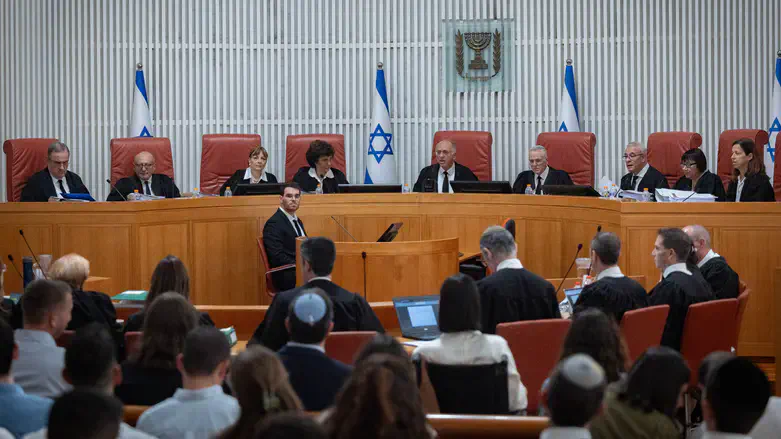
The Supreme Court on Thursday unanimously struck down an amendment to the Defense Service Law that froze arrest, investigation and enforcement proceedings against haredi men subject to military service who fail to report for duty.
The ruling was issued by an expanded nine-judge panel following five petitions filed against the amendment.
The amendment was enacted in July and added a chapter to the law titled “Freezing Arrest, Investigation or Enforcement Proceedings Against a Person Liable for Defense Service Who Is a Yeshiva Student - Temporary Provision."
In practice, it froze all enforcement proceedings against haredi men subject to military service who fail to fulfill their obligation to report for duty.
The main opinion was written by Supreme Court Deputy President Noam Sohlberg. All members of the panel agreed that the amendment substantially exceeded the subject matter of the bill that had passed its first reading.
The court ruled that the deviation meant that, in effect, the law had never passed a first reading. The justices described this as a fundamental defect in the legislative process and ruled that it was sufficient grounds to strike down the amendment.
In addition to the procedural defect, eight of the nine justices ruled that the amendment was unconstitutional on substantive grounds as well. According to the majority opinion, the law seriously infringes on the core of the constitutional right to equality and does not meet the requirements of the limitations clause.
Justice David Mintz disagreed with his colleagues on the constitutional issue and reached a different conclusion. However, he joined the rest of the panel in finding a defect in the legislative process, meaning the final decision to strike down the law was unanimous.
The panel consisted of Deputy President Noam Sohlberg and Justices Daphne Barak-Erez, David Mintz, Yael Wilner, Ofer Grosskopf, Alex Stein, Gila Kanfi-Steinitz, Yehiel Kasher and Ruth Ronnen.
At the conclusion of the ruling, the Supreme Court issued an absolute order striking down the amendment.