

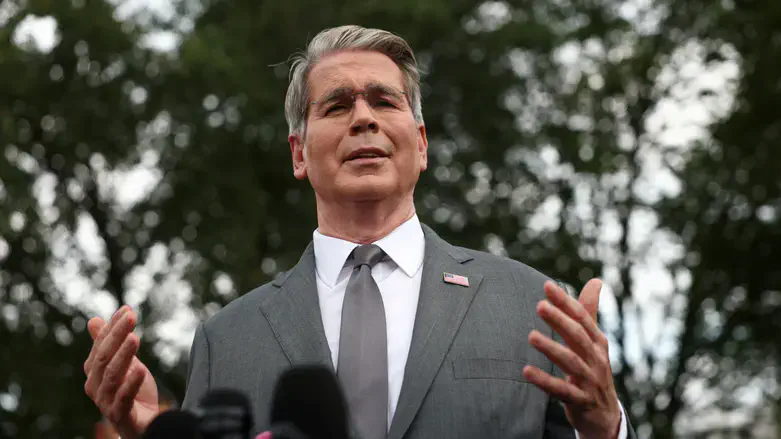
The Trump administration is preparing to sanction another bank this week as Washington steps up its campaign to isolate Iran financially, US Treasury Secretary Scott Bessent told The Associated Press on Sunday.
"This is going to be financial violence if we have to," Bessent said in the interview. "We are showing people that we know who you are, you know who you are, and this has got to stop."
Bessent made the comments ahead of Group of 20 meetings in Asheville, North Carolina, where he is scheduled to hold separate discussions with finance officials representing the world's major economies as well as developing nations. A key focus of his meetings will be securing international cooperation against Iran.
The administration has increasingly shifted its focus toward economic measures as the conflict with Iran enters its sixth month. Washington has described the effort as an "economic D-Day" against Tehran, which has already faced extensive US sanctions for decades.
Last week, Bessent announced "Operation Economic Outcast," a campaign designed to further isolate Iran and restrict the flow of money to its government. The United States subsequently announced new sanctions against UAE branches of Egypt's Banque Misr.
Under the Treasury Department's proposal, the Financial Crimes Enforcement Network (FinCEN) would block Banque Misr UAE from correspondent banking relationships with US financial institutions, limiting its ability to conduct dollar transactions involving Iran.
So far, however, the administration has primarily issued warnings to countries that continue trading with Tehran rather than imposing broad new penalties on those governments. One of the biggest challenges is China, Iran's largest trading partner and its main purchaser of oil.
Bessent told AP he plans to raise the issue with Chinese officials during the G20 meetings, adding that "all options are on the table" regarding potential sanctions against Beijing over its continued purchases of Iranian oil.
He rejected suggestions that Washington has been hesitant to confront China, describing such claims as "a completely false narrative that the media picked up on."
Bessent said Washington and Beijing share an interest in reopening the Strait of Hormuz and preventing Iran from obtaining a nuclear weapon.