


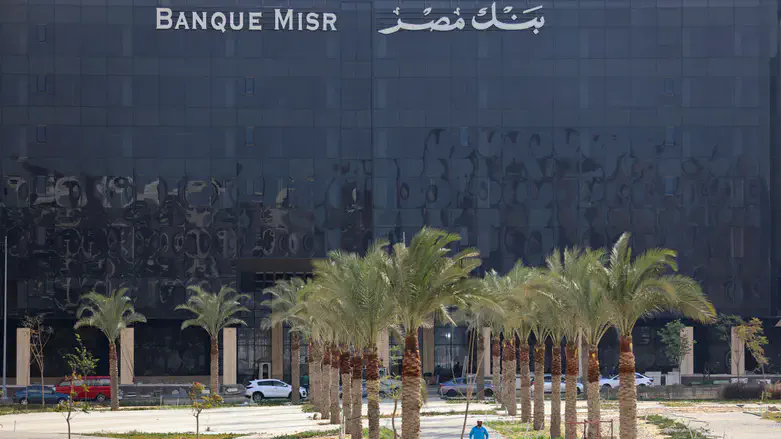
The United States on Friday imposed new Iran-related sanctions targeting branches of Egypt’s Banque Misr in the United Arab Emirates, as the Trump administration intensifies economic pressure on Tehran amid a six-month-old conflict and a diplomatic stalemate.
The Treasury Department said its Financial Crimes Enforcement Network (FinCEN) proposed cutting Banque Misr UAE off from correspondent banking access to US financial institutions, effectively restricting its ability to conduct dollar transactions connected to Iran.
"Treasury promised to sever every economic lifeline Tehran has left and finally end the threat of the Iranian regime," Treasury Secretary Scott Bessent said in a statement quoted by Reuters. "We also warned that Iran’s enablers cannot continue to enjoy access to the US dollar and the global financial system. Banque Misr UAE decided to find out the hard way, and today, we are taking the first step in holding it accountable for its continued, egregious support of the Iranian regime."
A Treasury official stressed that the measure applies only to Banque Misr's UAE branches. The bank's headquarters in Cairo and its other overseas branches, including those in Paris, Frankfurt, Riyadh, Beirut and Djibouti, will remain able to conduct dollar transactions.
Separately, the Treasury Department's Office of Foreign Assets Control sanctioned the manager of Iran's Bank Melli branch in the UAE and a Hong Kong-based entity accused of helping launder funds for an Iranian exchange house already under sanctions.
According to the Treasury, Banque Misr's six UAE branches constitute a "critical node" in Iran's access to US dollars. The department estimates that from January 2024 through June 2026, the branches processed roughly $1.8 billion in transactions involving 103 companies that may be connected to Iranian shadow banking networks.
The action came four days after Bessent unveiled "Operation Economic Outcast," a broad campaign aimed at isolating Iran economically and restricting revenue reaching the Iranian regime.
Tehran swiftly rejected the campaign. Iranian Economy Minister Ali Madanizadeh said Iran was prepared for the increased pressure and predicted that the United States would suffer “another defeat". He also said the government had prepared a two-year strategy for dealing with the sanctions.
“They have done everything they could to test the determination of the Iranian people and the country's officials, but they have failed every time. It seems they wished to suffer yet another defeat," Madanizadeh told Iranian state television.
“We've been waiting for these plans for a long time, and the government is and was ready and has a two-year plan to manage these events," he added.
Iranian Deputy Foreign Minister Kazem Gharibabadi also argued that the expansion of the US economic campaign showed that Washington had failed to achieve its military objectives.
“If Washington has achieved its goals, why is there a need for ‘the largest financial invasion in history’?" he asked, describing the measures as an acknowledgment of US failure.
(Arutz Sheva-Israel National News' North American desk is keeping you updated until the start of Shabbat in New York. The time posted automatically on all Israel National News articles, however, is Israeli time.)