

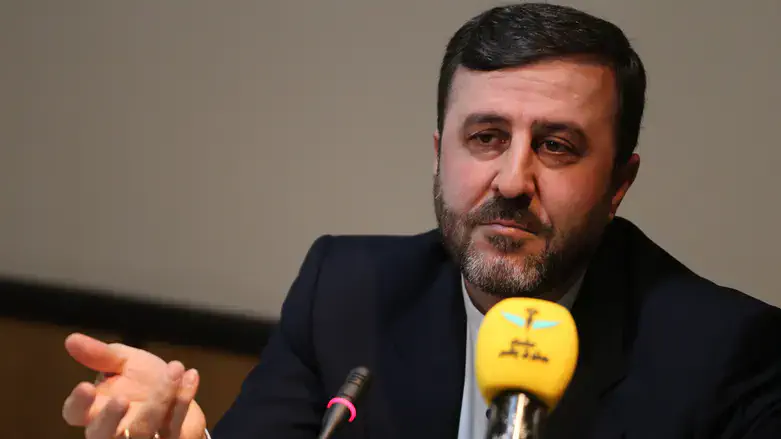
Iran is preparing a formal response to the United States that will be delivered through mediators once internal consultations have concluded, Deputy Foreign Minister Kazem Gharibabadi said Monday.
Speaking to Qatar-based Al Araby TV, Gharibabadi accused Washington of failing to fulfill its obligations under the Islamabad Memorandum of Understanding and said Tehran expected steps to address what it considers American violations of the agreement.
“Under circumstances in which Tehran believes the United States has not fully complied with its commitments, Iran cannot be expected to show greater flexibility," he said.
The Iranian official also warned that Tehran was as prepared to defend itself and engage in military conflict as it was to pursue diplomatic negotiations.
His remarks followed comments Sunday by Mohsen Rezaei, secretary of Iran's Supreme National Security Council, who criticized Washington's response to an Iranian proposal aimed at reopening the Strait of Hormuz.
During the United Nations General Assembly, Tehran presented a plan offering to restore normal maritime traffic through the strategic waterway within seven days, provided the United States agreed to seven conditions.
Washington subsequently communicated its position through Qatari intermediaries, but Iranian officials have maintained that the response failed to adequately address several of their demands.
Rezaei insisted that Iran would not reopen the strait to the United States or resume negotiations until its conditions were satisfied.
"We presented seven conditions to the Americans and clearly stated that the Strait of Hormuz would not be opened to them, and no negotiations would take place, until these conditions are met."
He further indicated that Tehran was awaiting clarification from Washington rather than drafting another reply, saying Iran was "no longer in the process of responding to the Americans".
"In their response, they have accepted some of our conditions, while others remain unclear," Rezaei added.
The statements reflect differing descriptions by senior Iranian officials of the next stage of diplomatic exchanges, with Gharibabadi indicating that a response is being finalized and Rezaei emphasizing that Washington must first clarify its position.
In late September, Iran announced that it had received an American response to an earlier proposal to restore the Gulf ceasefire, which had subsequently collapsed.
The announcement followed President Donald Trump's statement several days earlier that he had rejected Tehran's proposal.
Qatar and other regional mediators have continued facilitating indirect communications between Washington and Tehran in an effort to bring the conflict to an end and restore shipping through the Strait of Hormuz.
No agreement has been reached despite the continuing diplomatic efforts.
Meanwhile, Trump is considering whether to resume military operations against Iran while leaving open the possibility of a negotiated settlement.
On Thursday, the president announced that the United States would not carry out additional strikes against Iran before the November 3 midterm congressional elections.
“We are having productive discussions with the Islamic Republic of Iran," Trump wrote on Truth Social.
Trump also described Tehran as facing severe economic and military difficulties, while emphasizing that Washington would continue exerting pressure on the Iranian government.
Speaking at a White House event Friday, the president predicted that the war would end soon, suggesting that the United States was prepared to achieve that outcome through either diplomacy or military force.
He added, “We can do it either way, but it’s very simple - one way or another it’s gonna be over soon."