

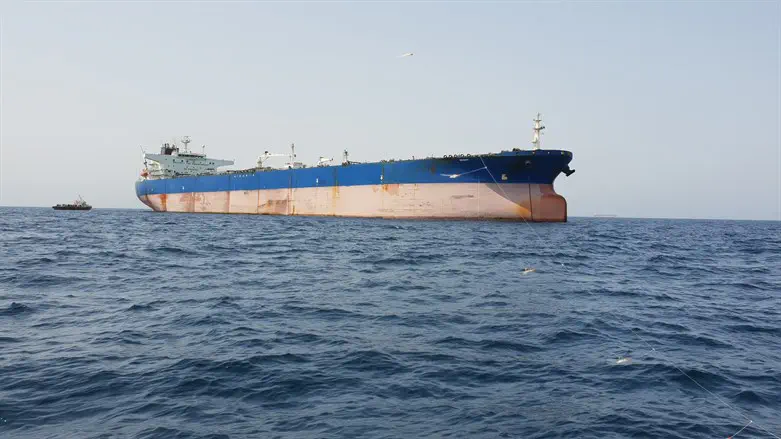
Iranian Foreign Ministry spokesman Esmaeil Baghaei has said that reopening the Strait of Hormuz is dependent on the US meeting Tehran's conditions.
"As long as the US naval blockade continues, along with its other violations, the necessary conditions will not exist for us to say that the Strait of Hormuz has become an open international waterway," he said.
"The United States must end these actions and compensate for the damage. Only afterwards can we begin discussing the next steps."
On Sunday, the Wall Street Journal reported that US President Donald Trump has been laying the groundwork to declare victory in the war with Iran even without reaching a new nuclear agreement.
According to the report, Trump has privately indicated to senior aides that he could be prepared to walk away from negotiations over Iran's nuclear program if Tehran fully reopens the Strait of Hormuz.
The administration has increasingly focused on restoring free passage through the strategic waterway after broader negotiations with Iran proved difficult. However, Iran has demanded billions of dollars in payments, the lifting of the US naval blockade, the withdrawal of American forces from the region and other concessions in exchange for reopening the Strait.
Iranian Supreme National Security Council secretary Mohammad Bagher Zolghadr said Tehran would require an end to the war, the lifting of sanctions, the release of frozen Iranian assets, war reparations and an end to US military action against Iranian-backed militias before allowing traffic through the waterway, according to Iranian state media.
Later on Sunday, Trump said that the US is taking a low-key approach toward Iran for now, signaling that he is prepared to allow economic pressure on the Islamic Republic to increase rather than order a new military offensive.
In a brief phone interview with Axios, Trump said the US is only "semi-negotiating" with Iran while watching the country's worsening economic situation.
"We are low-keying it," Trump said, adding that Iran is "in very bad shape" economically and does not have the money to pay its troops. He also said that the US naval blockade has intensified the regime's economic crisis.
At the same time, Trump said US consumers are experiencing less economic pressure from the war as oil prices have fallen to slightly above $75 per barrel.
"It will work out. It always works out. It's like a chess game," Trump said.