
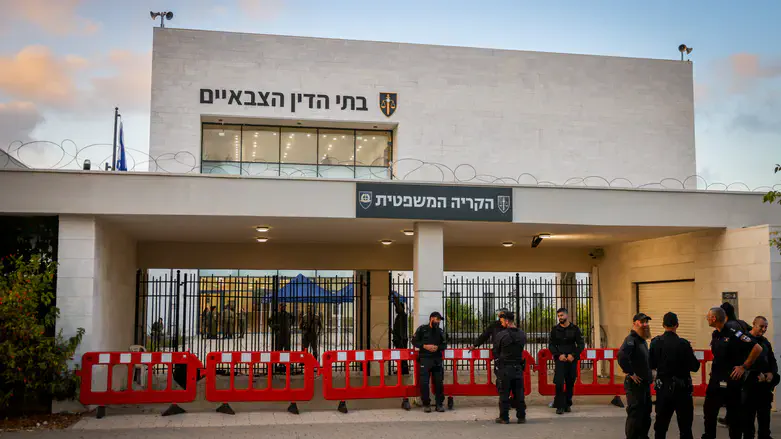
A military court has sentenced an IDF soldier to five years in prison after he admitted to and was convicted of serious security offenses, including contact with a foreign agent and passing information that could benefit the enemy.
According to details of the case, during 2025 the soldier began receiving messages on his private Telegram account from various individuals, some of whom were later identified as being linked to Iran. The messages initially offered him various jobs.
An Iranian agent later contacted the soldier directly and offered to pay him in exchange for carrying out photography assignments.
The soldier accepted the offer and sent the Iranian agent two videos that he had filmed himself showing missile interceptions in civilian areas during Operation Rising Lion. He received payment for one of the videos. He also sent the agent additional footage from civilian areas, including video of a direct missile impact that he had found online.
According to the indictment, due to the extreme pressure he was under, the soldier ultimately decided to report his contact with the foreign agent to an official in his military unit. He was arrested by the Shin Bet the following day.
During the sentencing phase, the military prosecution asked the court to impose a seven-year prison sentence on the soldier, along with additional penalties. Prosecutors stressed the exceptional severity of the offenses and the significant security risk they posed, arguing that the sentence should serve as both a personal and a general deterrent.
In handing down its sentence, the military court emphasized the gravity of the offenses, the fact that the defendant was an active-duty soldier, and that Israel was at war when the crimes were committed.
However, the judges also took into account several mitigating factors, including that the soldier did not transmit classified military information or information obtained through his military duties, and that he voluntarily ended the contact and reported it to his commanders without delay.
The court ultimately sentenced him to five years in prison, a suspended sentence, a NIS 1,000 fine, and demoted him to the rank of private.