

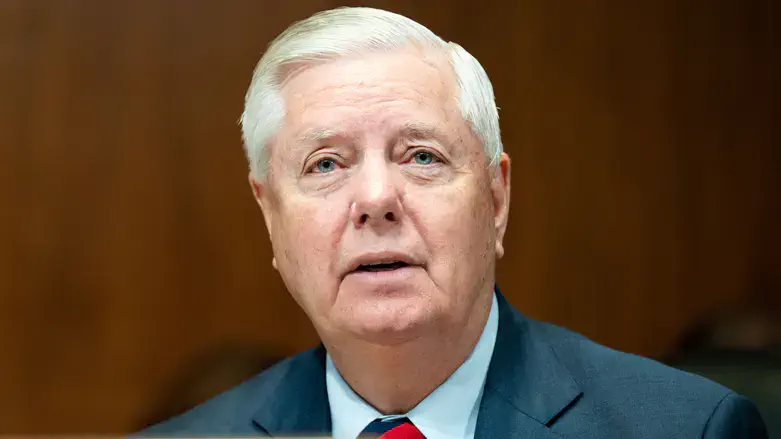
Right up to his sudden passing on Saturday, South Carolina Republican Sen. Lindsey Graham was actively directing a high-stakes diplomatic campaign designed to establish formal ties between Saudi Arabia and Israel, Axios’ Barak Ravid revealed on Sunday.
Over several conversations in the weeks preceding his death, the prominent lawmaker detailed to Ravid his vision to reshape the regional order. As a central force in American foreign affairs for decades, Graham remained dedicated to executing monumental diplomatic initiatives until his final hours.
Graham viewed formal Saudi-Israeli recognition as the ultimate objective of a comprehensive Middle Eastern peace strategy - a resolution intended to secure long-term stability following the conflict with Iran, according to Ravid’s report. Having pursued this goal across multiple presidential administrations, he argued that a weakened Iranian state presented President Donald Trump with a unique window to engineer a landmark agreement.
His target timeline involved launching a concentrated diplomatic offensive immediately after Israel’s October parliamentary elections and the US midterm contests, aiming to finalize the pact prior to the congressional swearing-in next January, the Axios report said.
Before any accord could materialize, Graham emphasized that hostilities involving Iran had to be contained, particularly the shipping crisis along the Strait of Hormuz. Should diplomatic efforts falter, he advocated for targeted, decisive US military strikes to restore passage through the strategic waterway.
Serving as an influential external national security consultant to Trump, Graham headed a contingent of hawkish strategists who favored robust military action against Tehran. By mid-May, he counseled the president to position Saudi-Israeli normalization as the core component of a regional post-conflict roadmap, according to Ravid’s report.
Following that recommendation, Trump held a conference call with leaders across Arab and Muslim nations, expressing a desire for them - most notably Riyadh - to establish diplomatic ties with Israel contingent on ending the war with Iran.
While Saudi Crown Prince Mohammed bin Salman had previously entertained formal relations with Israel, his interest had moderated over the preceding year. Saudi diplomats consistently maintained that any final agreement required a definitive, time-restricted trajectory toward Palestinian statehood. However, Prime Minister Benjamin Netanyahu’s coalition firmly dismissed that requirement, leaving it uncertain whether Israel's upcoming October elections would yield a leadership open to compromise.
To navigate these barriers, according to Ravid, Graham engaged in private discussions with key figures, including Trump, Jared Kushner, and Steve Witkoff, who agreed on a joint approach. He also conducted talks with former Strategic Affairs Minister Ron Dermer, Saudi Foreign Minister Prince Faisal bin Farhan, and Saudi Ambassador Princess Reema bint Bandar.
Graham had planned an upcoming fact-finding tour to Saudi Arabia and Israel, intending to kick off intensive negotiations in September to secure a completed agreement by November. Ultimately, he recognized that the initiative hinged on two core hurdles: building sufficient congressional backing in Washington and fostering an Israeli cabinet willing to accept Saudi terms.
Saudi Arabia and Israel appeared to be on track towards normalization before Hamas’ attack against Israel on October 7, 2023. After the massacre, Saudi Arabia put the US-backed plans to normalize ties with Israel on ice.
President Trump has said on more than one occasion that he expects an expansion of the Abraham Accords and expressed hope that Saudi Arabia will join the pact.