

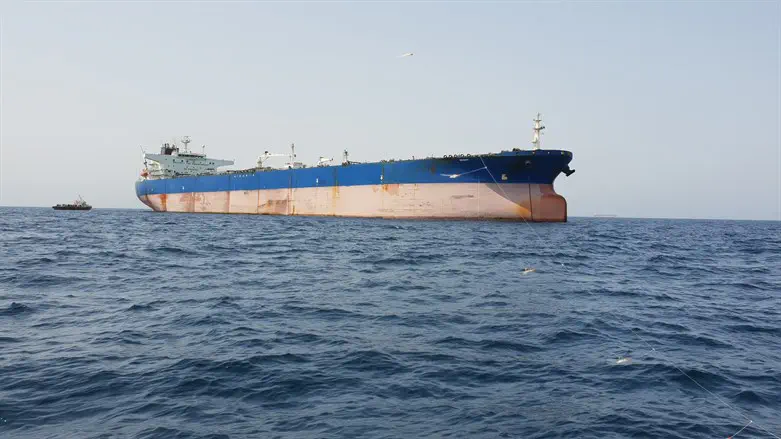
The Trump administration is demanding that the Iranian government issue an explicit public statement affirming that the Strait of Hormuz is fully open and committing to an immediate cessation of strikes on commercial vessels, according to a report by Axios.
The ultimatum has been transmitted to Tehran via both direct diplomatic channels and regional intermediaries, three US officials disclosed during a press briefing on Friday.
The development comes after Iran violated a bilateral memorandum of understanding (MOU) signed just three weeks ago by repeatedly firing on commercial ships transiting the strategic shipping lane.
In response, President Donald Trump earlier this week authorized a series of military strikes against targets in Iran.
On Friday, Trump said that Iran had asked to continue talks, but stated that the ceasefire is over.
“The Islamic Republic of Iran has asked us to continue ‘talks.’ We have agreed to do so, but the United States has stated to them, in no uncertain terms, that the Cease Fire is OVER!" the President wrote in a post on Truth Social.
American officials cited by Axios argue that if Tehran cannot honor basic maritime commitments, it raises profound doubts about its capability to execute a far more intricate nuclear pact.
The diplomatic standoff coincides with a high-stakes meeting scheduled for Saturday in Muscat between Iranian Foreign Minister Abbas Araghchi and Omani Foreign Minister Badr al-Busaidi to address the escalating maritime crisis.
Prior to the signing of the MOU, Oman had broken with Tehran by aligning with the US and its Gulf allies to open an alternative southern shipping channel near the Omani coast. Axios noted that the maneuver infuriated Tehran by stripping it of crucial negotiating leverage.
According to US officials, Iranian representatives privately admitted that radical factions within the regime initiated the ship attacks in a rogue bid to reclaim that lost leverage. Publicly, however, Iranian diplomats, Revolutionary Guard commanders, and senior figures have maintained a unified front, demanding that Tehran retain absolute authority over navigation through the strait.
Behind closed doors, a US official quoted in the report that the Iranians initiated contact with the administration following two days of intense military skirmishes earlier in the week, asking for further dialogue to mend the rift.
"They told us, 'We screwed up. We made a mistake. Let's keep talking,'" the official alleged.
Iranian Foreign Ministry spokesperson Esmail Baghaei vigorously denied that account on Friday, rejecting claims that Iran requested a fresh round of talks with the US and asserting that Tehran merely agreed to a Qatari-mediated proposal to hold discussions within Iran.
Nevertheless, US sources insist a fierce internal power struggle is underway in Tehran regarding how to handle negotiations with the Trump administration.
"There are elements within their system that want to reach a deal, but we can't make decisions for them. They need to get things under control," a US official told Axios.
The administration expects a public gesture from Tehran following Saturday's bilateral summit in Oman, the report stressed.
"We want them to publicly say that they will stop shooting at ships and explicitly, or at least implicitly, acknowledge that they screwed up. We are working on that now," one US official stated. "We expect the Iranians to say ... that every channel in the strait will be open and that it will be toll-free."
A second American official warned that the alternative would be severe.
"If it is not their position [tomorrow], it is not gonna be a great day for them," the official remarked.
(Arutz Sheva-Israel National News' North American desk is keeping you updated until the start of Shabbat in New York. The time posted automatically on all Israel National News articles, however, is Israeli time.)