

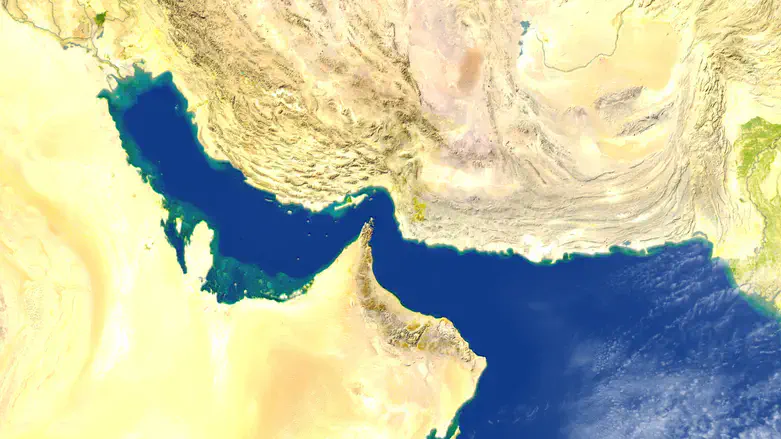
Iran’s top diplomat to China on Saturday reaffirmed that new operational charges will be levied on commercial vessels traversing the strategic Strait of Hormuz, an initiative strongly opposed by the United States, AFP reported.
However, the envoy noted that allied partners would be granted relaxed terms.
While an opening ceasefire brokered between Tehran and Washington to conclude their armed conflict dictated that global shipping could use the chokepoint without cost for a 60-day window, the long-term maritime framework beyond that period remains unresolved.
Speaking at the World Peace Forum hosted in Beijing, Iranian Ambassador Abdolreza Rahmani Fazli stated that his government is currently organizing "collaboration and cooperation" alongside neighboring Oman to establish "new arrangements" governing the critical commercial corridor.
“As a country where the Hormuz is part of its territorial waters, we will definitely charge service fees," Fazli clarified in translated statements, though he maintained that the forthcoming financial assessments should not be categorized as a traditional “toll."
“These new arrangements will be concerning guaranteeing the security of passage through the Straits of Hormuz, supervision of the passage of the vessels... and also guaranteeing and dealing with the environmental consequences of the massive number of ships," he explained.
The diplomat went on to emphasize that geopolitical alignment during the recent hostilities would dictate the economic terms for foreign merchant fleets.
“We will definitely consider special treatment for the countries that were friendly to us and specially stood by us during the hard times," he remarked.
The vital waterway normally facilitates the transit of roughly 20% of global liquefied natural gas and crude oil supplies. However, traffic ground to a near-total halt during the broader Middle East war due to an Iranian blockade, triggering a sharp spike in worldwide energy costs.
Tehran subsequently reopened the Strait of Hormuz following the initial preliminary accord with the United States to suspend active fighting. Diplomatic delegations are continuing to negotiate terms to achieve a permanent resolution to the war.