

The Central Bureau of Statistics published 2025 social survey data, mapping Israelis’ trust in government institutions and state organizations.
At the top of the index is the health system, which has the highest level of trust in Israel, with 87% of the public. Trust in the medical system cuts across sectors and population groups, with 88% of men and 85% of women expressing support. It receives 90% trust among the Arab public and 86% among the Jewish public.
Within the Jewish population, support remains consistent and uniform: 88% among secular respondents, 86% among religious respondents, 85% among haredi respondents, and 84% among traditional respondents.
In second place on the trust index is the IDF, which is supported by 83% of the overall public in Israel, with 61% of them saying they trust it to a great extent. The level of trust in the army rises as respondents get older, reaching 54% among young people aged 20 to 44, 62% among those aged 45 to 64, and 73% among those aged 65 and above.
92% of Jews report trust in the IDF, compared with only 51% of Arabs, while 14% of Arab respondents said they do not trust the army at all.
Israel Police are trusted by only 55% of the public, while 40% say they do not trust it, including 22% who said they do not trust it at all and 18% who said they do not trust it very much.
The level of trust in the police remains similar across different age groups, but varies by religion: 59% of Jews express trust, compared with 40% of Arabs. In the religious breakdown among Jews, 69% of the religious and 64% of the traditional believe in the police, compared with 52% of secular respondents and only 48% of haredi respondents.
The judicial system registers an even lower figure: 48% of the overall public expresses trust, compared with nearly half of citizens who are cautious about it. 63% of secular respondents trust the judicial system; the figure drops to 44% among traditional respondents, 32% among religious respondents, and falls to a low of 13% among the haredi public, the vast majority of whom, about 63%, said they do not trust the system at all.
At the bottom of the national index are political institutions. Around 36% say they trust the government of Israel, while an overwhelming majority of the public is skeptical, with 39% saying they do not trust it at all and 18% saying they do not trust it very much. The government receives 38% trust among Jews and 31% among Arabs. Support for the government is based mainly on the religious public, with 64%, and the traditional-religious segment, with 56%, compared with 42% among non-religious traditional respondents, 37% among haredi respondents, and only 21% among secular respondents. In practice, 58% of secular respondents and 34% of haredi respondents say they do not trust the government at all.
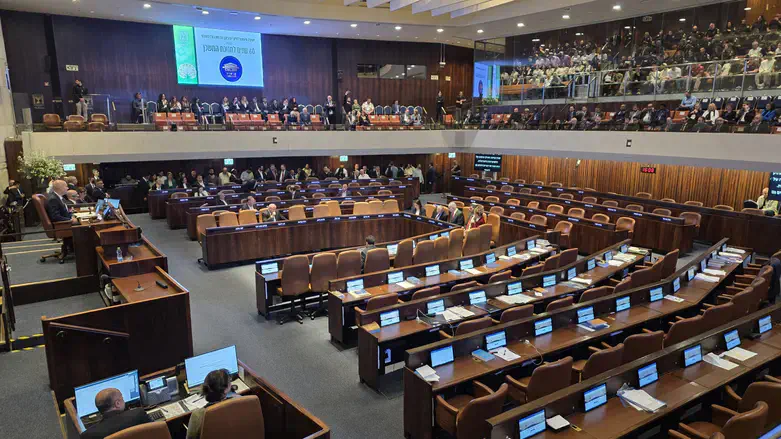
At the bottom of the list is the Knesset, which is trusted by only one-third of the public, about 33%. 60% of Israelis do not place trust in the legislature, with 36% saying they do not trust it at all and 24% saying they do not trust it very much. The Knesset has 34% trust among Jews and 29% among Arabs.
The religious public is the only group in which a majority expresses trust in the Knesset, at 54%, while in the other sectors the figures are significantly lower: 40% among traditional respondents, 27% among haredi respondents, and only 24% among secular respondents. Meanwhile, nearly half of secular respondents, about 47%, said they do not trust the Knesset at all.