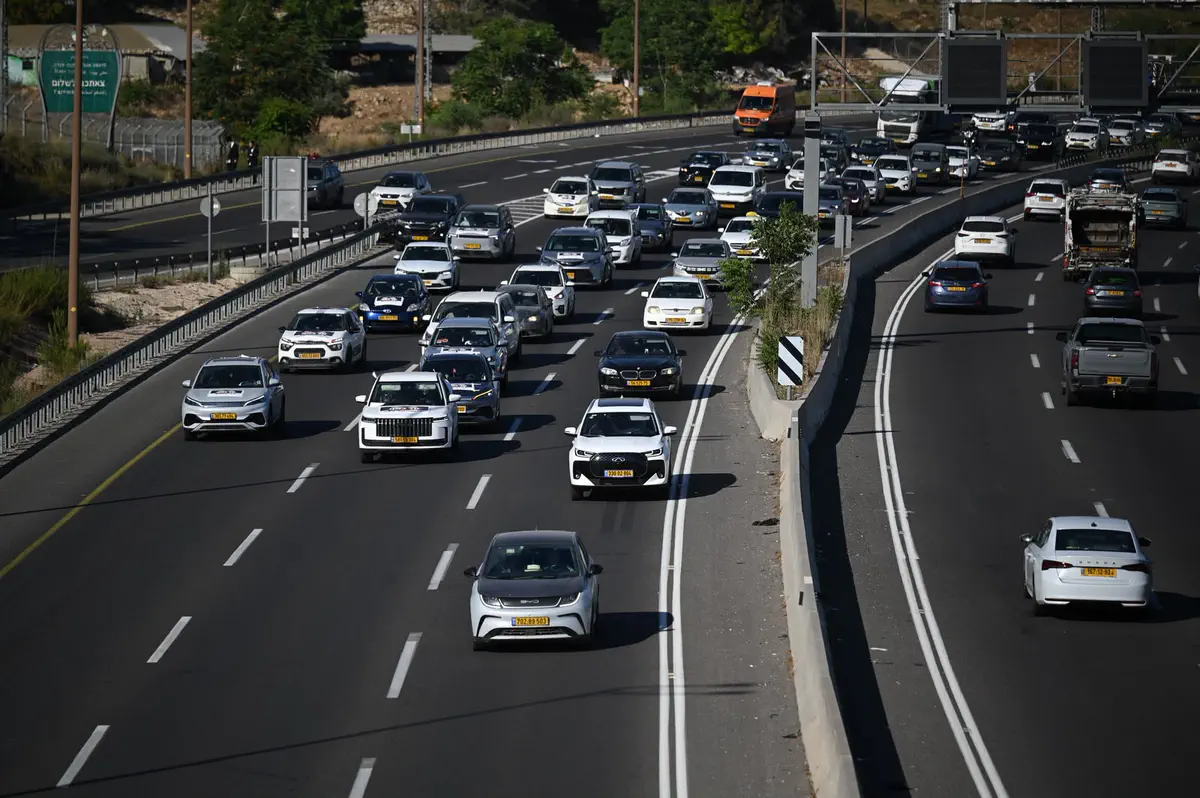
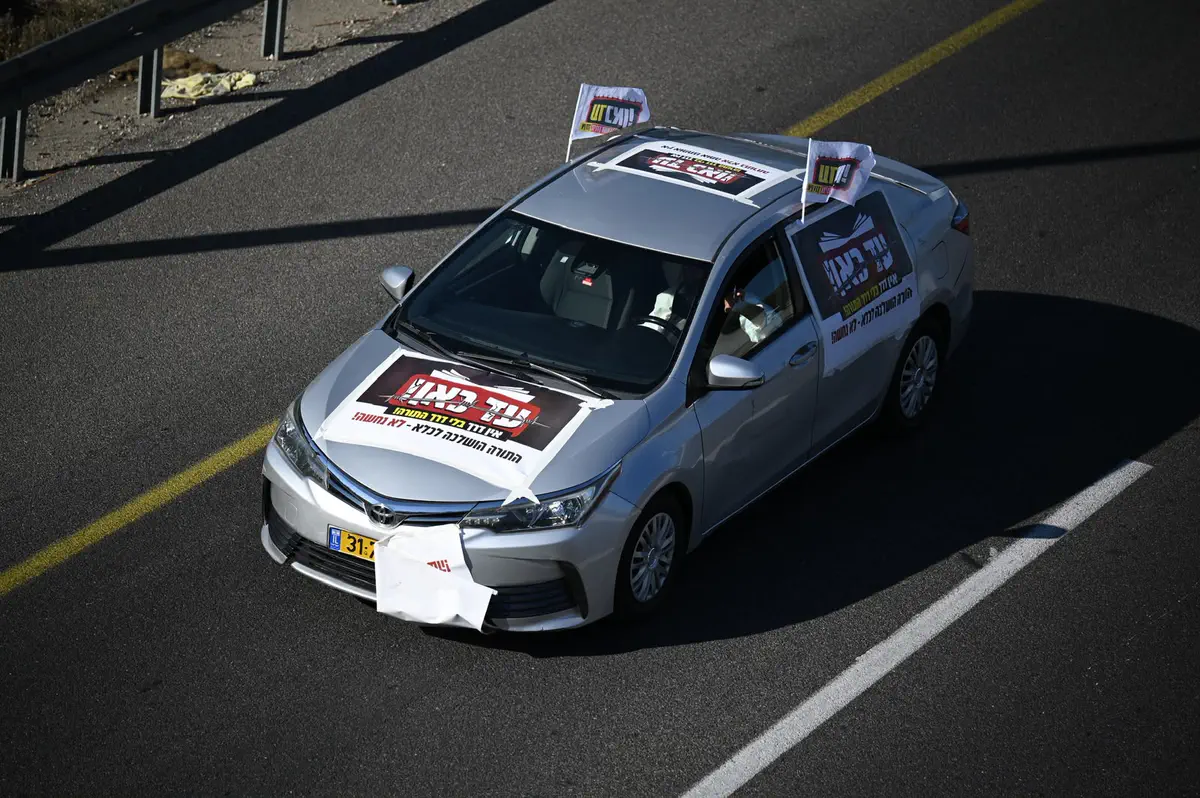
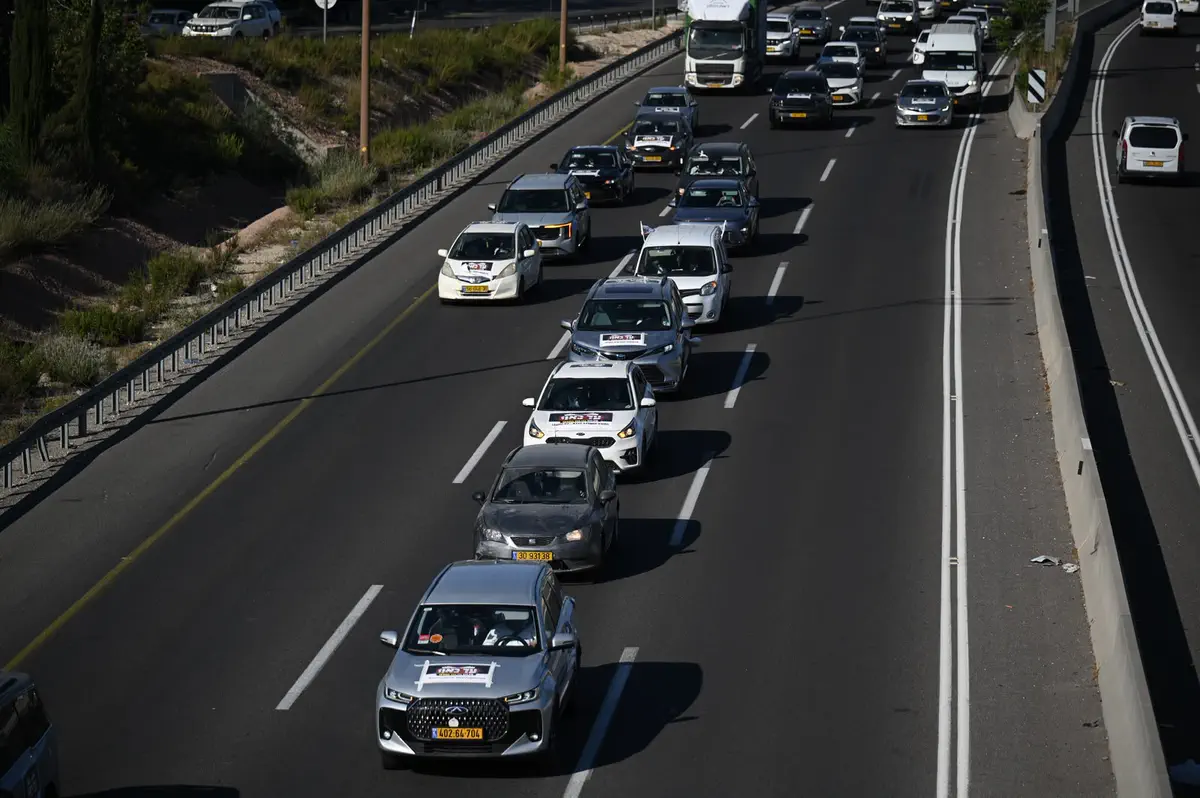
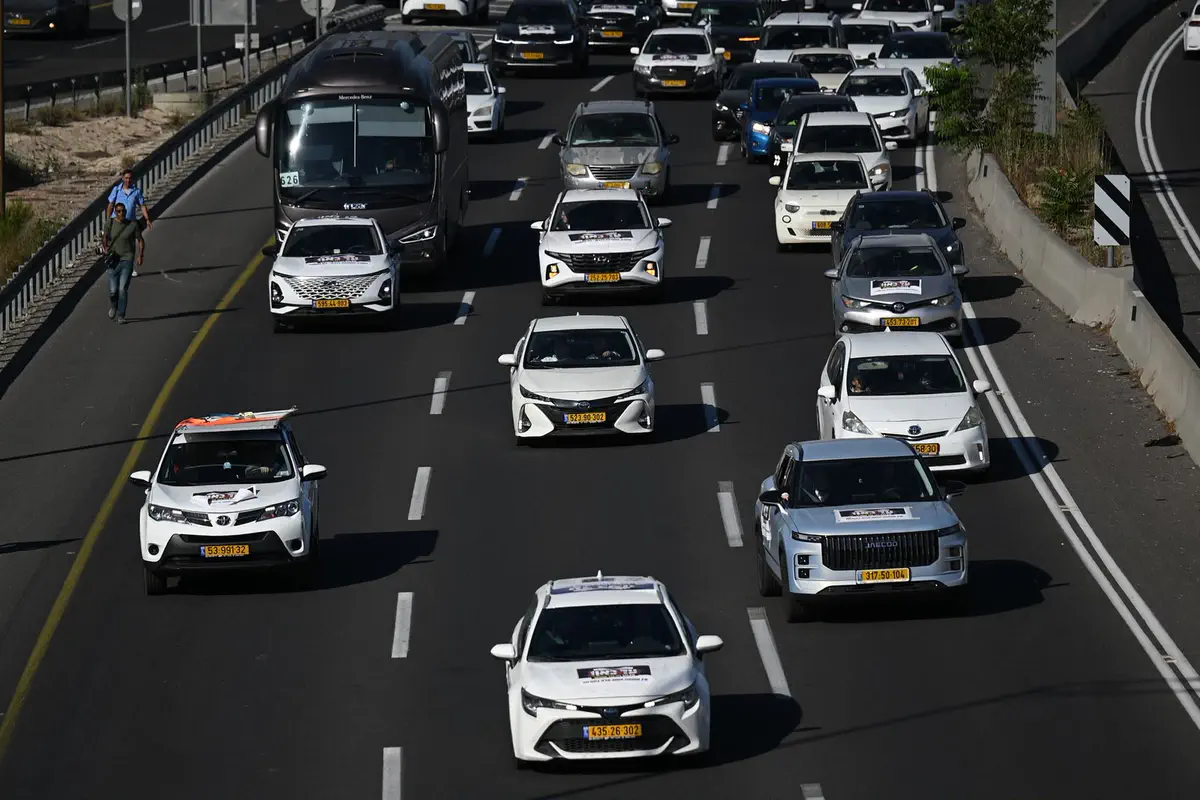
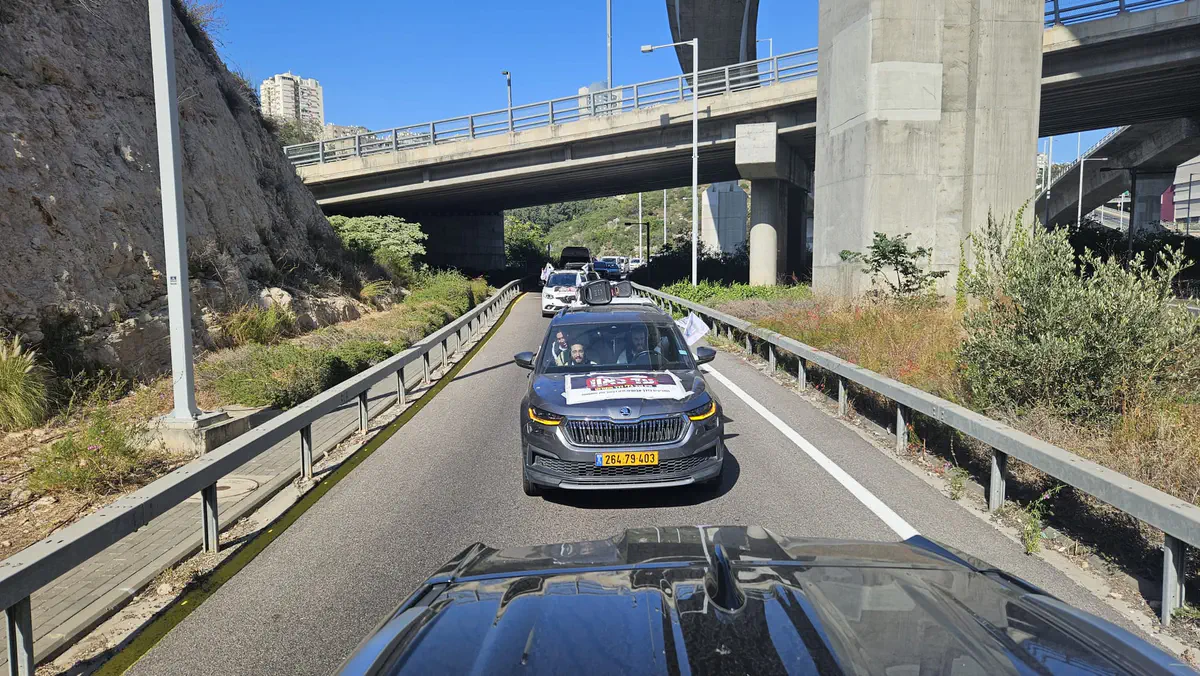
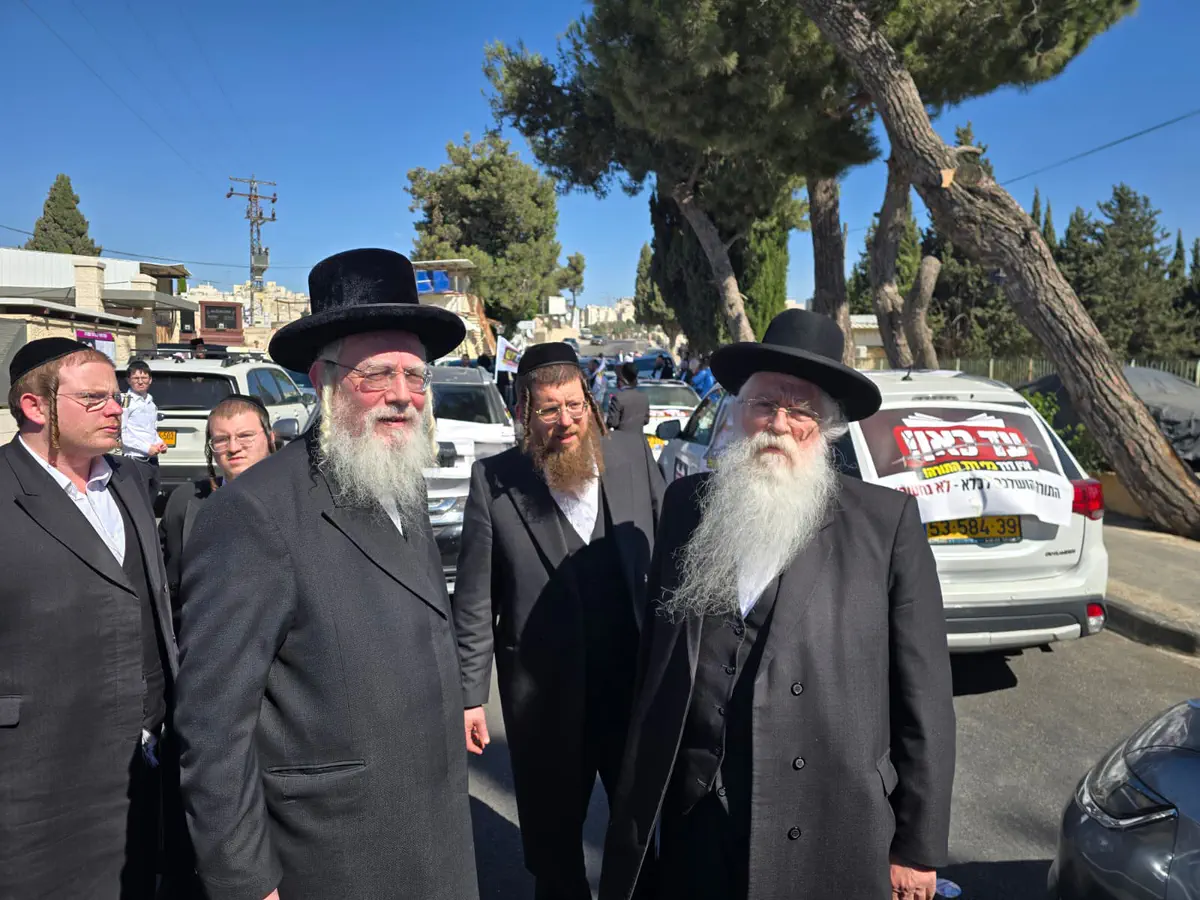
The nationwide haredi protest convoy got underway on Wednesday afternoon in coordination with the police.
The organizers stated that the conoy's routes were drawn to allow a clear expression of protest against the arrest of draft dodgers while carefully preventing anarchy and illegal disturbances of public order.
The convoys departed from 19 different staging areas in haredi population centers, including Jerusalem, Bnei Brak, Ashdod, Beit Shemesh, and Elad. At these locations, drivers received explanation materials, flags, and signs to decorate their cars and embarked toward the intercity roads.
Due to the protest, heavy traffic congestion is being reported on Route 1 near Sha’ar HaGai and Shoresh, westbound; Route 2 near Beit Yanai, northbound; Route 4 near Ra’anana, northbound; Route 7 near Beit Raban, eastbound; Route 443 near Mevo Modi’im, westbound. Traffic authorities are dealing with significant slowdowns across these corridors as a result of the ongoing disruptions.
The organizers issued a series of strict decorum and safety regulations to all participants, stressing that the demonstration is an orderly event and not a spontaneous riot. Drivers were clearly instructed not to initiate roadblocks of any kind and not to stop their cars in the middle of the road, as this could result in fines.
"The goal of the procession is to express protest in a clear and significant manner, while totally avoiding violent or physical friction and fights with security forces or bystanders," the organizers stated.
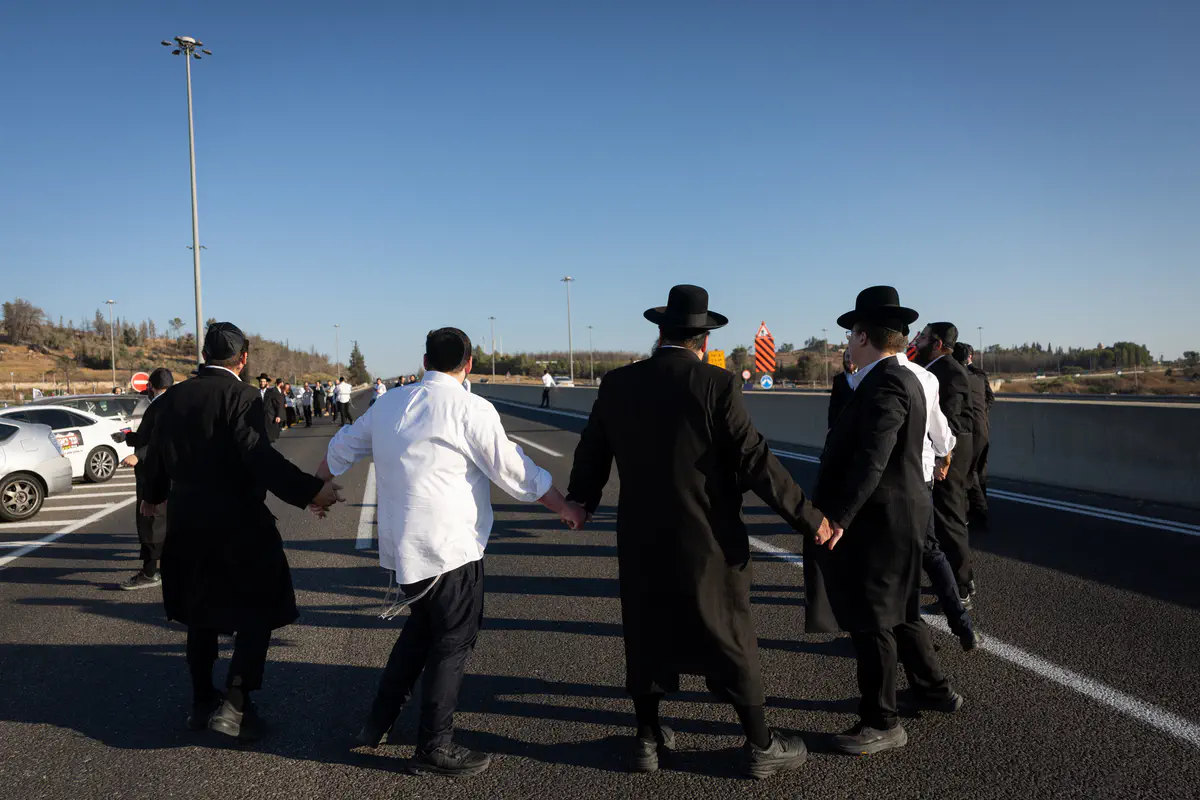
Despite the organizers' instructions and agreements with the police, protesters in several locations were reported to have stopped their vehicles in the middle of the road, exited them, and blocked traffic.
On the Tel Aviv-bound Route 1, protesters exited their vehicles and stopped traffic for some time until police arrived and the convoy continued to move. In Haifa as well, protesters exited their vehicles and began dancing in the middle of the road.
On Route 1, a pregnant woman was severely injured after she collided with the car in front of her while driving next to the convoy.
At the same time, the organizers claimed that drivers participating in the protest were attacked in at least two separate incidents.
In one case, they alleged that a truck driver attacked a vehicle that had departed from the Bnei Brak area, striking it while armed with a knife and a club. Israel Police officers were called to the scene.
In another incident, near Beitar Illit, a man allegedly crashed his vehicle into the car of Deputy Mayor Gedalyahu Eisenstein and then assaulted him. Police also intervened in that case.
In Arad, a confrontation broke out between Gerrer hassidim and secular activists after the activists blocked the adherents' vehicles participating in the protest convoy.
Police were dispatched to the scene and separated the sides.
To ensure the participants' safety, organizers issued strict driving guidelines according to which the entire convoy will only travel in the right lane. The vehicles will travel at a uniform and constant speed of approximately 50 km/h, depending on road conditions, while maintaining a distance between cars that is double the usual to prevent pile-up accidents.
For the benefit of the drivers, a central command post and a telephone update system have been established to provide real-time guidance to the convoys. In addition, attorney Natan Rosenblatt will provide ongoing legal assistance and be available to handle urgent cases throughout the afternoon.