

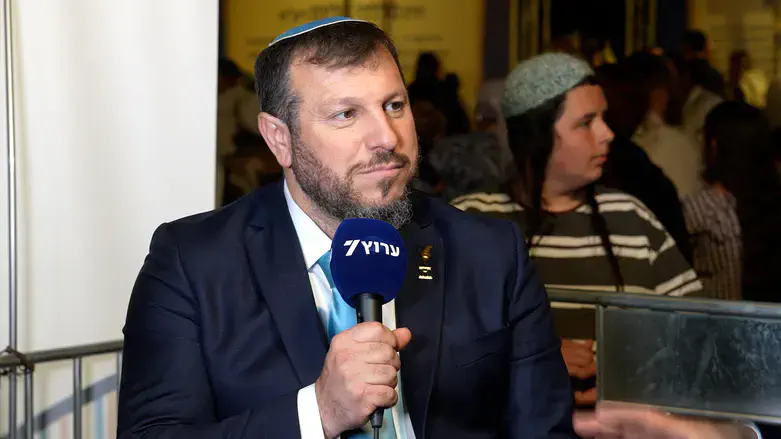
Amid the security tensions in the north and reports of the “memorandum of understanding" being advanced by the Trump administration with Iran, Heritage Minister Amichai Eliyahu on Monday evening gave his full backing to his party chairman, Minister Itamar Ben Gvir, who called to “set Lebanon on fire."
Minister Eliyahu argued that the statement was necessary and declared that the only solution for achieving quiet on the front is to place full responsibility on the Lebanese government.
“We cannot continue playing by rules in which we do not decide the campaign," Minister Eliyahu said in an interview with Kol Chai Radio.
“Hezbollah is no longer a local militia, but a military organization that has embedded itself within the institutions of the Lebanese state. In order to achieve quiet, we need to act according to the model of ‘Black September’ in 1970 - when the Jordanian kingdom was forced to take responsibility and clear the terrorist organizations from its territory by force. Beirut must understand that it will pay the full price."
Addressing the negotiations being conducted by US President Donald Trump with Iran, the Heritage Minister sharply criticized American policy and compared it to the agreements signed on the eve of World War II.
“The United States is racing down a path toward a terrible mistake and surrendering to narrow interests. Making peace with an absolutely evil regime is a diplomatic disgrace, and whoever chooses it will ultimately receive a much harsher war."
Despite his criticism of the American framework, Minister Eliyahu clarified that his party is not considering issuing a political ultimatum or bringing down the government, arguing that Prime Minister Benjamin Netanyahu is leading a firm and tough approach toward the agreement.
“There is no reason for threats. The Prime Minister is moving in the right direction, and we are strengthening him from within," Eliyahu explained, crediting Otzma Yehudit for the offensive policy.
“Without our presence in the government and the limited Cabinet, the system would have broken long ago. We would not have approved entering Rafah, we would not have maneuvered in Lebanon, and we would not have reached the eliminations of Sinwar and Nasrallah," he added.