

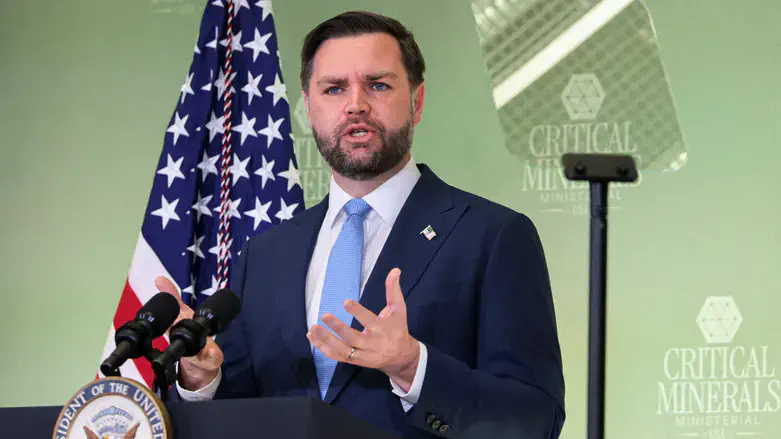
Vice President JD Vance offered new details about the administration's approach to a ceasefire framework with Iran in an interview with CBN, emphasizing regional security concerns, particularly along Israel's northern border. He noted that Israel has made clear it intends to maintain its security posture in southern Lebanon to protect its citizens from threats.
"The deal doesn't talk about Israel getting out of Lebanon, but I think they would love to - once the Hezbollah threat is gone. They're saying they won't get out until they can protect their people," Vance said. "Israel has the right of self-defense. Nobody is going to tell another government that they are not allowed to defend their citizens."
"We are going to work aggressively to ensure that the people of both Israel and Lebanon have sovereignty and safety. Because the regime in Iran is so weak, we have a better opportunity to achieve that than we have had in a long time."
Speaking about the agreement, Vance stressed the importance of the U.S.-Israel partnership while acknowledging that disagreements sometimes arise between allies.
"The Israelis have been important partners against the Islamist threat," Vance said. "The United States and Israel have disagreements from time to time, and some people in Israel have criticized the President because they don't like the deal, even though they don't know what's in it. When the people of Israel see what's actually in the deal, they'll like it. It will be a good deal."
Vance also stressed that any relief provided to Tehran would be strictly tied to its behavior rather than promises or written commitments. Addressing skepticism about Iran's intentions, Vance emphasized that the administration is focused on measurable actions rather than assurances from Tehran.
"I certainly hope that Iran isn't lying, but that's not concerning to me because we don't trust anyone," he said. "The President told us not to trust anything written on paper. The good things only happen through action. If they do things, they get things. If they don't, they don't get any benefits. The President has told us to reward good conduct, not good words."
Vance argued that the framework is designed to ensure that any attempt by Iran to revive its nuclear program would be quickly detected. "We'll be able to see if they're rebuilding their nuclear program," he said. "We can't control what a future president might do, but we can destroy their program - which we've done - and make it impossible for Iran to rebuild it without it becoming obvious to the international community."
He also highlighted what he described as a broader strategic benefit of the agreement: strengthening cooperation among U.S. regional partners. "An underappreciated aspect of the President's approach is that it transforms relationships with the Gulf Arab states," Vance said. "Under the Obama nuclear deal, many Gulf countries opposed the agreement because they believed it empowered Iran to behave badly throughout the region. This framework empowers regional partners such as Israel and the Gulf states to manage the Iran challenge themselves."
While expressing concern about how future U.S. administrations might approach Iran policy, Vance said he remains confident in the region's allies. "I can't trust what a future Democratic administration might do," he said. "But I trust our regional allies to manage Iran."