

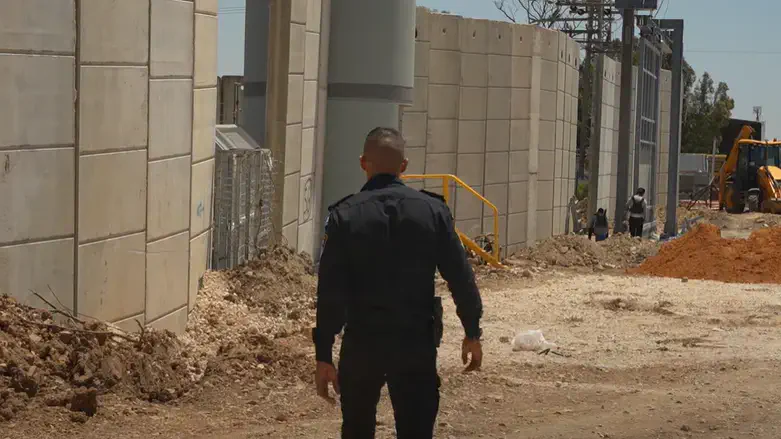
The Knesset Foreign Affairs and Defense Committee, chaired by MK Boaz Bismuth, held a discussion on Tuesday on security for communities along the Seam Line.
At the start of the meeting, Bismuth referred to a tour he conducted last week in the Hefer Valley area, during which the terror attack near Kochav Yair took place, claiming the life of reservist Master Sgt. Haim Kalomity.
“This attack was a painful reminder of what we saw on the ground," Bismuth said. “Terror is not far from us. It is beyond the fence, beyond the road, just minutes from our homes. In the face of such a reality, there is no room for complacency and no room for a false sense of routine."
The committee chairman stressed that the Seam Line communities do not always receive the public and security attention they require.
“These are frontline communities in every sense of the term," he said. “Their residents live on the security front line and face real threats. They must not be pushed to the margins of national priorities. It is our duty to ensure they receive the full security response they need."
The open discussion was attended by regional council heads and local leaders from the area. Hefer Valley Regional Council head Galit Shaul warned against reductions in security personnel and said, “We cannot leave our residents without protection." She argued that civilian emergency response squads alone do not provide a complete solution and that professional, readily available forces are needed to respond immediately during emergencies.
South Sharon Regional Council head Oshrat Gani Gonen referred to the recent terror attack near Tzur Natan and said, “Terror does not distinguish between the Green Line and the Blue Line." She called for the creation of a coordinating body to oversee all agencies operating in the area.
“The Seam Line is Israel’s soft underbelly. It is its narrow waist. These are not just slogans-this is the reality on the ground," she said.
Kochav Yair-Tzur Yigal council head Hila Ben Harosh said residents’ sense of security had been significantly damaged by the attack.
“Had the terrorist entered the community and carried out his murder spree inside it, we would be talking about completely different numbers today," she said.
According to Ben Harosh, a series of investigations conducted after the attack revealed numerous failures and highlighted the lack of a clear division of responsibility among the IDF, Israel Police, Border Police, and local authorities.