

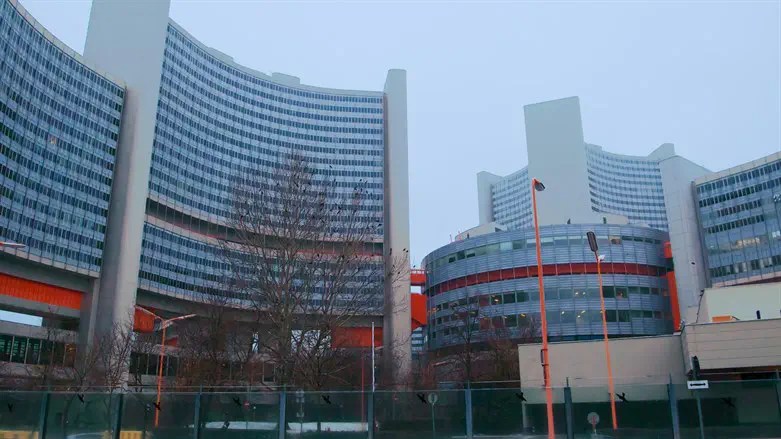
The International Atomic Energy Agency (IAEA) has authorized an American-supported resolution mandating that Tehran disclose its remaining stockpiles of enriched uranium and permit international oversight, Reuters reported.
The development was finalized during a closed-door assembly of the IAEA's 35-nation Board of Governors on Wednesday.
While combined aerial campaigns by American and Israeli forces last June severely compromised or demolished the Islamic Republic’s core enrichment centers, intelligence assessments indicate that a substantial volume of the enriched material - including stockpiles refined near weapons-grade thresholds - remained intact.
To date, Tehran has withheld information from the IAEA regarding the present location or condition of that material, while concurrently blocking inspectors from conducting assessments at the bombed facilities.
Iranian representatives slammed the decision, labeling it an attempt to legitimize military aggression given that international monitors maintained access to the locations prior to last year's airstrikes.
The Western-backed text, co-sponsored by the United States, France, Germany, and Great Britain, secured passage with 21 supportive votes, three opposing votes, and 10 abstentions. Diplomats confirmed that Russia, China, and Niger cast the dissenting votes.
"Not only do Iran's actions raise urgent concerns regarding the nature of its nuclear program, they also threaten the very integrity of the global nuclear safeguards regime," the four Western nations warned in a collective statement presented to the board, as quoted by Reuters.
When pressed on how the regime plans to respond to the mandate, Iran's Ambassador to the IAEA, Reza Najafi, told reporters that the choice rests entirely with Tehran.
"Without addressing the root causes of the present situation, the resolution focuses exclusively on their consequences and makes a number of excessive demands (on) Iran," Najafi noted following the session.
An agreement announced last September between Iran and the IAEA, intended to resume inspections and uranium accounting, has since been declared void by Tehran after Britain, France, and Germany triggered the return of UN sanctions previously lifted under the 2015 nuclear deal.
IAEA chief Rafael Grossi recently assessed that the bulk of Iran’s highly enriched uranium stockpile is probably still located at the Isfahan nuclear complex which was struck last June.
Grossi added that the IAEA also seeks access to Iran’s nuclear sites at Natanz and Fordow, where additional nuclear material is present.