

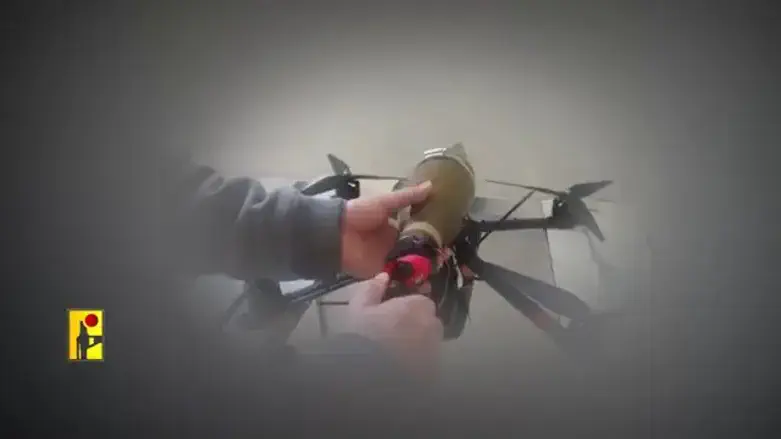
The prolonged war and the IDF’s daily confrontation with explosive drones and unmanned aerial vehicles operated by Hezbollah and Iran - which have taken a heavy toll among forces - have demonstrated how a small and inexpensive aircraft, costing only a few thousand dollars to manufacture, can successfully penetrate defense systems, while intercepting it often requires the use of costly advanced missiles whose availability is limited.
This strategic challenge is not unique to Israel. An article published this week in The Wall Street Journal reveals how the U.S. military is attempting to solve this economic equation, presenting a tactical solution that could also point the way forward for Israel’s defense establishment.
According to the report, United States Marine Corps forces recently tested a new mobile air-defense system called MADIS during an exercise in the Philippines. Instead of relying solely on traditional air-defense missiles, the system - mounted on light tactical vehicles - combines advanced radar, electronic warfare jamming capabilities, and cannons capable of firing smart 30mm shells.
These shells do not require a direct hit on the drone itself in order to destroy it. The smart fuse detects when the shell is close enough to the target and detonates it in midair, creating a lethal cloud of fragments that neutralizes the threat.
A burst of smart 30mm shells - even if around five rounds are needed for a successful interception - costs only about $11,250. This represents a more economically proportional response against Iranian-made Shahed drone suicide drones, which cost roughly $30,000, or against small drones and tactical explosive drones costing only $1,500-$5,000 - precisely the type of threats Hezbollah operates along Israel’s northern border.
Despite the system’s significant promise, the Wall Street Journal report also highlights the main challenge facing this new approach: production capacity. Proximity fuses are delicate and highly complex electromechanical components, and only a limited number of production lines are capable of manufacturing them on a massive scale.
For such a system to be effective in a prolonged war of attrition, militaries will need to stockpile hundreds of thousands of these shells. Major American defense companies have already begun expanding their factories to meet the surge in demand.