
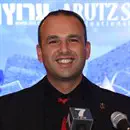

In an urgent letter sent Thursday to Transport Minister Miri Regev, the chief rabbi of TTzfat, Rabbi Shmuel Eliyahu, criticized the transportation arrangements for the upcoming Meron celebrations, claiming they effectively exclude large segments of the population, particularly members of the national-religious community and residents of Israel’s periphery.
Rabbi Eliyahu argued that although the event is intended to serve as a unifying national gathering, the allocation of transportation resources disproportionately favors certain groups, while many religious Zionist families and residents of outlying communities face significant difficulties obtaining tickets and transportation access to the mountain.
“This is not merely a logistical question, but a moral issue," Rabbi Eliyahu wrote. “It is impossible to accept a reality in which participation in the event becomes inaccessible to entire sectors of the public."
He further stated that access to Meron is currently unequal, with some regions lacking sufficient transportation solutions altogether. According to the rabbi, the tradition of traveling to Meron for the annual celebrations was historically shaped in part by traditional communities, residents of peripheral towns and the broader religious public.
“Today, precisely those communities are encountering real obstacles in reaching the mountain, while other groups enjoy significantly greater accessibility," he wrote.
The Ministry of Transport and Road Safety responded by saying that following a recent status meeting about the pilgrimage, it was decided that the ministry would provide buses and trains in accordance with the requirements set by the Ministry of Jerusalem and Heritage and the event’s production company.
The ministry added that ticket sales for attendees are being handled by the Ministry of Jerusalem and Heritage together with the production company. It also noted that due to directives from emergency authorities and restrictions on the number of participants permitted on the mountain, responsibility for crowd management and emergency evacuation planning rests with the designated ministry and event organizers.